
Sony Alpha NEX Cameras Reviewed: A7 IV Performance Guide

Affiliate disclosure: Some links on this page are affiliate links. If you buy through them we earn a small commission at no extra cost to you. Recommendations are research-driven; we don't claim personal use of every product reviewed. Product prices and availability are accurate as of the date published and are subject to change. Always check Amazon for current pricing before purchasing. Learn more.

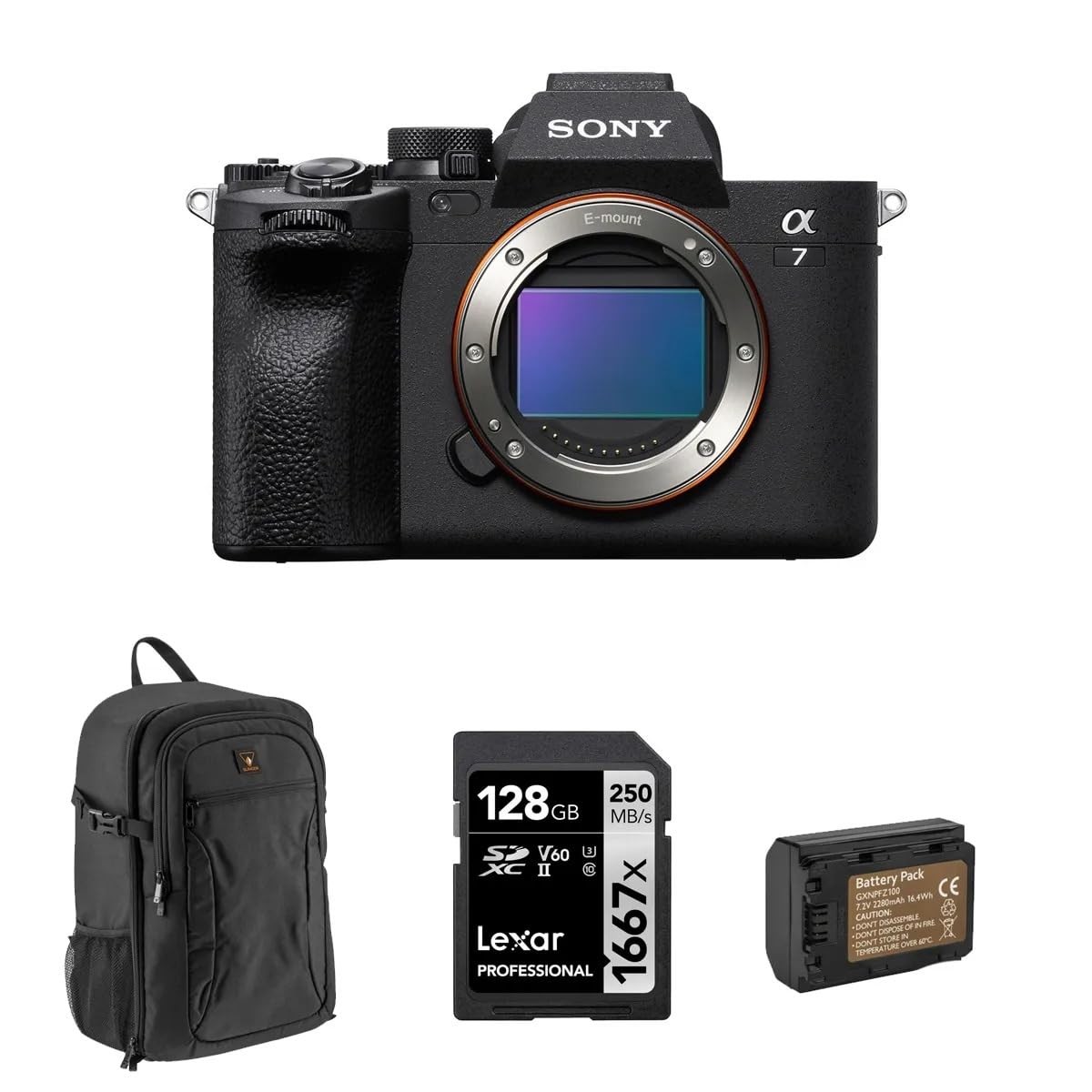
Strong autofocus with subject tracking
See Alpha a7 IV Full Frame Mirrorless Int… on AmazonSony’s Alpha NEX lineup helped establish the modern mirrorless market, and the full-frame evolution of that system , the Alpha 7 series , remains one of the most capable camera platforms available to serious shooters. Whether you’re moving from a DSLR, upgrading from an earlier Sony body, or starting fresh with mirrorless, understanding what the A7 IV delivers across sensor performance, autofocus, and video is the foundation of a good decision. For a broader look at the full range of options in the lineup, the Sony Cameras hub is a useful starting point.
The three listings covered here are variants of the same camera , the A7 IV , at different configurations and purchase conditions. Knowing which version fits your situation matters more than the spec sheet alone.
What to Look For in Sony Alpha NEX Cameras
Sensor Performance and Resolution
The sensor is the core of the decision. The A7 IV uses a 33MP BSI-CMOS full-frame sensor , a meaningful step up from the 24MP in the A7 III, and a different class of resolving power than anything in the APS-C NEX range. Full-frame sensors capture more light across larger photosites, which translates directly into shadow recovery, dynamic range, and usable high-ISO performance.
For landscape, portrait, and studio work, 33 megapixels provides enough resolution to crop aggressively without losing detail. Owner reports on DPReview and r/SonyAlpha consistently note that the A7 IV’s high-ISO behavior is a step above the A7 III , noise is finer-grained and better managed in post. If resolution is your limiting factor for client work or large prints, this sensor clears that bar for most use cases.
Autofocus Capability and Subject Tracking
Sony’s phase-detection autofocus has been the benchmark in this market segment for several years. The A7 IV carries Sony’s Real-time Tracking and Real-time Eye AF , both human and animal , and the implementation in this body represents a mature, reliable version of that system. Photographers who need confident subject tracking in motion-heavy scenarios, particularly portrait and wildlife work, will find the AF behavior here to be among the strongest in this class.
The distinction between this body’s AF and older NEX-era systems is substantial. Earlier NEX cameras relied primarily on contrast-detect AF, which was slow by current standards. The A7 IV’s hybrid system locks quickly, maintains lock under movement, and fails gracefully when subjects are partially obscured , characteristics that r/SonyAlpha contributors who shoot events and sports flag consistently as differentiators.
Video Specifications and Practical Usability
The A7 IV shoots 4K video with oversampling from a 7K readout at up to 30fps, and 4K at 60fps with a 1.5x crop applied. For hybrid shooters , those who balance stills work with commercial or content video , this is a meaningful spec. The 10-bit 4:2:2 internal recording at S-Log3 gives editors latitude for color grading that earlier Sony bodies could not deliver internally.
Practical usability in video mode is worth evaluating separately from raw specs. The A7 IV includes a headphone jack, microphone input, and full-size HDMI , the full professional audio and monitoring infrastructure that makes it functional as a primary video camera. Reviewers at The Phoblographer and community threads on r/videography both point to the A7 IV’s video ergonomics as notably better than the A7 III’s.
Ecosystem Fit and Lens Compatibility
Lens mount compatibility determines the long-term cost and flexibility of any mirrorless system. The A7 IV uses the Sony E-mount, which supports the full FE lens lineup , currently over 70 native lenses from Sony alone, plus a wide range of third-party options from Sigma, Tamron, and Samyang. Adapted glass via the LA-EA5 adapter also brings compatibility with legacy A-mount lenses.
For buyers coming from APS-C NEX bodies, the same E-mount means existing APS-C lenses mount physically , though they will trigger APS-C crop mode on a full-frame body, reducing effective resolution. Exploring the full range of compatible lenses and system options across Sony Cameras before committing to a body is worth the time.
Top Picks
Sony Alpha a7 IV Full Frame Mirrorless (Bundle)
The bundled version of the A7 IV is the most practical entry point for buyers who don’t already own Sony accessories. The Sony Alpha a7 IV Full Frame Mirrorless bundle includes a 256GB SD card, an extra battery, a camera backpack, and Sony’s one-year limited warranty alongside the camera body itself. For buyers setting up a new system from scratch, sourcing those items separately tends to cost more and requires additional research time.
The camera itself performs identically to the standalone version , same sensor, same autofocus system, same video specification. The extra battery is particularly relevant for video-heavy use, where the A7 IV’s runtime under continuous recording is shorter than in stills mode. Owner reports on Amazon and in r/SonyAlpha threads frequently cite battery life as a pain point for all-day event shooting, and having a charged spare eliminates that constraint.
The backpack inclusion is functional rather than premium , buyers who already own a dedicated camera bag may find the bundled option redundant. That said, for photographers without existing Sony infrastructure, the bundle represents a well-configured starting point. The menu system does have a learning curve, particularly for users arriving from Canon or Nikon systems, but Sony’s help guides and community resources on r/SonyAlpha document the workflow efficiently.
Check current price on Amazon.
Sony Alpha 7 IV Full-frame Mirrorless Interchangeable Lens Camera
The standalone Sony Alpha 7 IV is the reference version of this camera , the body alone, without bundled accessories, allowing buyers who already own Sony batteries, cards, and bags to purchase only what they need. For photographers upgrading from an A7 III or A7C, this is the natural path, since existing NP-FZ100 batteries, SD cards, and bag systems carry forward without modification.
Sensor performance here centers on a dynamic range that DPReview’s studio comparison tool places among the top performers in this class. At base ISO, the A7 IV’s raw files show excellent highlight headroom and deep shadow recovery , a practical benefit for mixed-light portrait work and landscape shooting where exposure latitude matters. Verified buyer reports consistently note that high-ISO files from this sensor hold detail in ways the A7 III’s 24MP sensor does not.
The autofocus implementation in this version is the same Sony Real-time Tracking system referenced across the lineup. Portrait photographers in r/SonyAlpha threads particularly note the reliability of Eye AF on this body , it acquires eyes quickly, holds through movement, and recovers when subjects turn partially away from the camera. The menu system is the most frequently cited adjustment for users arriving from other brands, but it is learnable, and Sony’s touchscreen navigation reduces the initial friction considerably.
Check current price on Amazon.
Sony Alpha 7 IV Full-frame Mirrorless Interchangeable Lens Camera (Renewed)
The certified renewed version of the A7 IV makes full-frame Sony performance available at a lower entry point for buyers who are comfortable with manufacturer-refurbished hardware. The Sony Alpha 7 IV (Renewed) carries the same sensor and autofocus capability as the new listings , no hardware differences , and Sony’s certification process covers inspection, testing, and repackaging to manufacturer standards.
The practical consideration for renewed hardware is warranty coverage and cosmetic condition. Renewed units typically show minimal to no cosmetic wear, but the warranty terms differ from new purchases , buyers should confirm the specific warranty terms at the time of purchase. For photographers who weight ownership risk against purchase price, the renewed channel is a legitimate option, particularly if the camera will be used carefully or in controlled shooting conditions.
Video capability on the renewed unit is unaffected by renewal status , the same 4K oversampled output, 10-bit internal recording, and full HDMI monitoring are available here as on a new body. For hybrid shooters who want the A7 IV’s video specification without the premium purchase price, the renewed listing is worth evaluating seriously. Community discussion on r/SonyAlpha suggests that renewed Sony bodies have a strong track record of reliability.
Check current price on Amazon.
Buying Guide
Choosing Between New and Renewed
The fundamental trade-off between new and renewed A7 IV listings is purchase price versus warranty certainty. A new body comes with Sony’s full one-year limited warranty and the assurance of zero use history. A renewed body from Sony’s certified program offers the same hardware with manufacturer testing behind it, but warranty terms and duration vary.
For buyers planning heavy professional use , events, commercial assignments, extended travel , a new body’s warranty provides clearer protection. For careful hobbyist shooters or those building a secondary system, the renewed channel is a reasonable path to full-frame Sony performance.
Bundled Accessories: Genuine Value or Redundant?
The bundle configuration of the A7 IV adds a 256GB SD card, extra battery, and backpack. These have real value for first-time Sony buyers, but become partially redundant for photographers who already own UHS-II cards, NP-FZ100 batteries, or a preferred bag system.
Evaluate the bundle honestly against your existing inventory. If you own zero Sony accessories, the bundle packages essentials efficiently. If you’re upgrading from an A7 III, your existing NP-FZ100 batteries carry forward directly, which reduces the bundle’s marginal value.
Sensor and Resolution Fit
At 33MP, the A7 IV is positioned between high-resolution bodies like the A7R V and the speed-oriented A9 series. For most portrait, travel, and general photography use cases, 33MP is more resolution than the work requires , which translates into flexibility for cropping and reprinting rather than excess.
Buyers whose primary output is screen-based content, social media, or moderate-size prints do not need 33MP to achieve their goals. The resolution becomes meaningful for large-format printing, heavy cropping, or commercial licensing work where file size is specified. Review your actual output requirements before treating resolution as a key differentiator. Browsing the broader Sony Alpha camera lineup alongside this body’s spec sheet helps calibrate what resolution you actually need.
Autofocus and Shooting Style Alignment
Sony’s Real-time Tracking and Eye AF system is optimized for subject-forward shooting , portraits, events, wildlife, and any scenario where a subject moves unpredictably across the frame. For static landscape, architecture, or product work where subjects don’t move, the AF system’s sophistication is largely irrelevant to image quality.
The A7 IV’s AF delivers most of its value to photographers who shoot moving subjects in variable lighting. If that describes your primary use case, the AF system here is a genuine asset. If it doesn’t, the body’s sensor and video capabilities may be the more relevant evaluation criteria.
Menu System and Learning Investment
The A7 IV runs Sony’s newer menu architecture, which is a significant improvement over the A7 III’s system but still unfamiliar to photographers arriving from Canon, Nikon, or Fujifilm. The touchscreen interface mitigates the learning curve, and Sony’s custom button assignment system allows experienced users to surface their most-used functions quickly.
Budget time for menu familiarization before first important use. Community resources on r/SonyAlpha include pinned menu setup guides that reduce setup time substantially. The learning curve is real but not steep , most photographers report feeling confident with the system within a few weeks of regular shooting.
Frequently Asked Questions
What is the difference between the bundled and standalone Sony A7 IV listings?
The bundled version includes a 256GB SD card, extra battery, camera backpack, and Sony’s one-year limited warranty alongside the camera body. The standalone version includes only the body and standard accessories. Both versions contain identical camera hardware , the same sensor, autofocus system, and video capability. The bundle offers the most value to buyers who don’t already own Sony-compatible accessories.
Is the Sony Alpha 7 IV a good choice for video as well as stills?
The A7 IV is a strong hybrid camera. It captures 4K video oversampled from a 7K readout at up to 30fps, with 10-bit 4:2:2 internal recording in S-Log3 , a specification that provides genuine color-grading latitude in post. It includes a headphone jack, microphone input, and full-size HDMI. Photographers and videographers who need a single body to handle both disciplines reliably will find the A7 IV capable across both use cases.
How does the renewed Sony Alpha 7 IV compare to buying new?
The renewed A7 IV from Sony’s certified program undergoes inspection and testing to manufacturer standards, with the same hardware as a new unit. The practical differences are warranty duration and terms, which vary for renewed listings and should be confirmed at purchase. Cosmetic condition on certified renewed Sony bodies is typically excellent. For careful shooters who weight price against warranty certainty, the renewed option is a legitimate alternative to a new purchase.
Does the A7 IV work with lenses from older Sony NEX or A-mount systems?
The A7 IV uses Sony’s E-mount, which is physically compatible with older APS-C E-mount lenses from NEX-era bodies , though those lenses will trigger APS-C crop mode, reducing the effective resolution. A-mount lenses are compatible via Sony’s LA-EA5 adapter, which also preserves phase-detection autofocus with most supported A-mount glass. Native FE-mount full-frame lenses are the recommended path for maximizing the A7 IV’s sensor coverage and autofocus performance.
How steep is the learning curve for Sony’s menu system on the A7 IV?
The A7 IV runs Sony’s revised menu system, which is more organized than the A7 III’s but still requires an adjustment period , particularly for photographers arriving from Canon or Nikon. The touchscreen navigation and customizable button layout reduce friction considerably once configured. Most users report reaching comfort with the system within a few weeks. Community resources on r/SonyAlpha include detailed setup guides that significantly accelerate the process.
Sony Alpha a7 IV Full Frame Mirrorless Interchangeable Lens Digital 4K Camera, Black - Bundle with 256GB SD Memory Card, Extra Battery, Camera Backpack, Sony 1 Year Limited Warranty: Pros & Cons
- Strong autofocus with subject tracking
- Excellent video capabilities
- Menu system has a learning curve for new users
Where to Buy
Sony Alpha a7 IV Full Frame Mirrorless Interchangeable Lens Digital 4K Camera, Black - Bundle with 256GB SD Memory Card, Extra Battery, Camera Backpack, Sony 1 Year Limited WarrantySee Alpha a7 IV Full Frame Mirrorless Int… on Amazon