
Sony Alpha A7R Camera Review: Resolution vs. Autofocus

Affiliate disclosure: Some links on this page are affiliate links. If you buy through them we earn a small commission at no extra cost to you. Recommendations are research-driven; we don't claim personal use of every product reviewed. Product prices and availability are accurate as of the date published and are subject to change. Always check Amazon for current pricing before purchasing. Learn more.

Strong autofocus with subject tracking
See Sony Alpha a7R IV A Full-Frame Mirror… on AmazonChoosing the right Sony Alpha body is harder than it looks. The A7R line sits at a specific intersection of resolution, autofocus capability, and build quality that suits certain photographers extremely well , and demands careful matching against your actual shooting priorities. Understanding what distinguishes each body in the Sony Cameras lineup matters as much as any single spec sheet comparison.
Resolution alone doesn’t tell the whole story. The sensors differ in meaningful ways across the A7R and A7 IV families, and so do the autofocus implementations, ergonomic decisions, and ecosystem commitments you’re making when you choose one over the other. What follows is a detailed look at the three bodies that consistently surface at the top of this search , with specific attention to who each one actually serves.
What to Look For in a Sony Alpha A7R Camera
Sensor Resolution and Its Trade-offs
The defining characteristic of the A7R line is its high-megapixel sensor, and understanding what high resolution actually means for your workflow is the most important decision you’ll make before purchase. More megapixels mean larger file sizes, faster storage drain, and heavier demands on your computer’s processing hardware. They also mean more latitude for cropping, larger print output, and finer detail rendering in complex subjects like architecture, foliage, and fine portraiture.
Resolution doesn’t automatically mean better image quality. Base ISO performance, dynamic range, and color rendering all contribute to what a finished file looks like. Owner reports from landscape photographers consistently note that the A7R line produces files that hold up under aggressive post-processing , shadow recovery, highlight rollback, and heavy cropping all tend to preserve detail in ways that lower-resolution sensors cannot match.
The practical question is whether your subjects and output actually require that resolution. Documentary, sports, and casual portrait photographers frequently find that a lower-resolution body with faster burst rates serves them better. High-megapixel sensors reward careful shooting habits and penalize technique errors , camera shake becomes more visible, focus accuracy matters more, and lens sharpness is tested more rigorously.
Autofocus System and Subject Tracking
Sony’s autofocus architecture has evolved significantly across the A7R and A7 IV generations, and the differences are meaningful in practice. Eye-tracking, subject recognition, and tracking persistence under difficult light all vary by body. For photographers shooting moving subjects , wildlife, events, children, athletes , autofocus system generation matters more than sensor resolution.
The A7 IV line introduced Sony’s latest subject recognition system, which handles human, animal, bird, and vehicle subjects with meaningfully higher reliability than older iterations. Verified buyer feedback across camera communities indicates that tracking lock is more consistent and handoff from face to eye detection is faster. The A7R IV A updated the autofocus over the original A7R IV, which is worth noting if you’re comparing across the line.
Continuous autofocus during video recording is a separate consideration from stills tracking. If video is a significant part of your workflow, check specifically whether the body’s subject tracking maintains reliability during recording , not all bodies perform equivalently on this metric.
Ergonomics and Build Quality
Sony’s full-frame mirrorless bodies share a family feel in hand, but there are meaningful differences in grip depth, button layout, and control customization across generations. The A7R IV A and A7 IV both offer dual card slots and improved weather sealing relative to earlier Sony bodies , a consistent owner complaint in the A7 III era that Sony addressed deliberately in later hardware.
Button count and dial placement matter more for certain shooting styles than others. Photographers who work in gloves, or who shoot in conditions requiring immediate adjustments without menu access, tend to prefer more physical controls. Sony’s customization system is deep enough that most working button layouts are achievable, but the default layouts require time investment to optimize.
Body size interacts with lens choice more than most buyers anticipate. A compact body on a large telephoto lens creates balance issues that affect stability and fatigue on longer shoots. Evaluating ergonomics with your primary lenses in mind , not just the body in isolation , is the more useful test.
Video Specifications and Real-World Use
Both the A7R IV A and A7 IV shoot 4K video, but the implementations differ. The A7 IV records 4K at up to 60fps with full pixel readout in Super 35 crop mode, which is a meaningful capability gap over bodies that require pixel binning to reach 4K. Oversampled 4K typically renders more detail and lower rolling shutter , visible in fast-panning shots and footage with vertical lines.
Log profiles and color science both matter to video-focused buyers. Sony’s S-Log3 provides significant dynamic range latitude for grading, and S-Cinetone gives a more immediately pleasing rendition without grading investment. Which approach suits you depends on your post-production workflow.
Buyers who plan to shoot hybrid stills-and-video work will find the A7 IV’s video architecture more purpose-built for that combination. The full range of Sony Cameras spans bodies optimized primarily for stills, primarily for video, and genuinely for both , knowing which category your work falls into narrows the decision significantly before you evaluate any specific body.
Ecosystem Fit and Long-Term Investment
Sony’s E-mount lens ecosystem is mature. The full selection of Sony G Master, Sony Zeiss, and third-party options , Sigma, Tamron, Voigtländer , is now large enough that nearly any shooting specialty has multiple excellent options. This is a different situation than it was five years ago, and it changes the risk calculus of investing in the system.
Full-frame E-mount investment locks you into Sony bodies going forward, unless you’re willing to adapt , which works for many lenses with varying autofocus fidelity. Buyers coming from Canon or Nikon who own significant glass should evaluate adapter compatibility carefully before committing. Native E-mount glass performs best, but the third-party options now available at various price points make building a practical kit achievable without exclusively purchasing Sony-branded lenses.
Top Picks
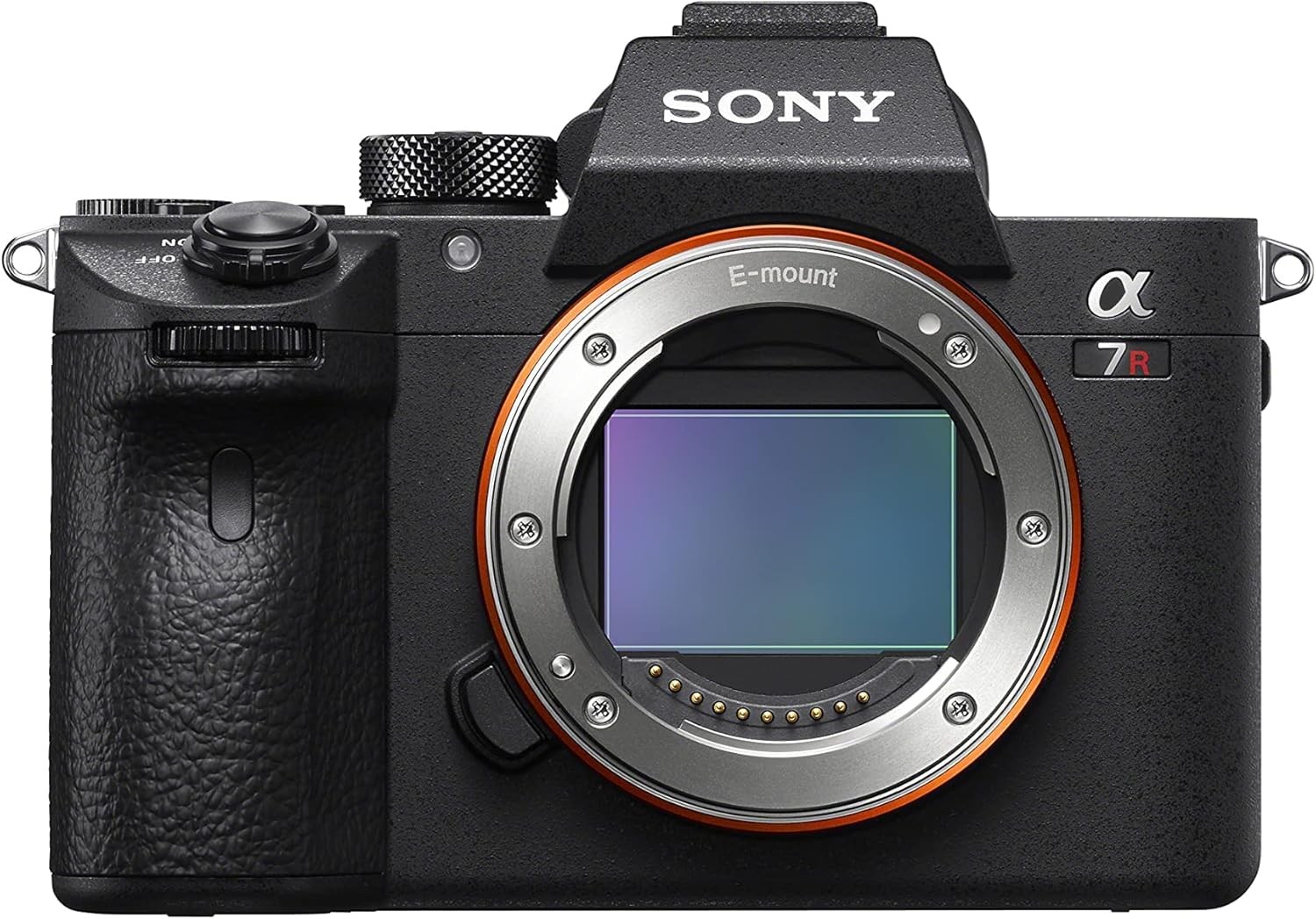
Sony Alpha a7R IV A Full-Frame Mirrorless Camera Body
The Sony Alpha a7R IV A Full-Frame Mirrorless Camera Body is the most direct answer for buyers whose primary driver is maximum sensor resolution. The 61-megapixel sensor remains one of the highest-resolution options in full-frame mirrorless, and owner reports from landscape, architecture, and commercial photographers consistently point to file quality as the body’s distinguishing strength.
The IV A designation distinguishes this body from the original A7R IV through autofocus improvements , specifically, the addition of real-time tracking and real-time Eye AF across human and animal subjects. Community feedback in r/SonyAlpha indicates this update closed a meaningful gap against competitors. Tracking persistence on moving subjects improved, and face-to-eye handoff became more reliable.
For portrait and environmental photographers shooting controlled conditions, the resolution advantage here is genuine. Studio buyers and landscape photographers report that 61 megapixels provide cropping and print output latitude that lower-resolution bodies simply cannot match. Buyers who shoot primarily in challenging light or high-motion contexts should weigh whether the resolution premium serves their specific subjects , the autofocus improvements in the IV A make this more competitive than the original, but the A7 IV remains the stronger hybrid body for mixed shooting.
Sony’s menu system has a learning curve that multiple verified buyers note in reviews , this is a consistent pattern in the A7R line and is not specific to the IV A. Plan for meaningful setup time before the body performs intuitively. Once customized, the control layout is flexible enough to accommodate most shooting styles.
Check current price on Amazon.
Alpha a7 IV Full Frame Mirrorless , Bundle with 256GB SD Card, Extra Battery, and Camera Backpack
The bundle version of the A7 IV addresses one of the practical friction points in premium mirrorless purchases , you leave with an immediately functional kit rather than a body that requires immediate additional purchases. The Alpha a7 IV Full Frame Mirrorless bundle packages a 256GB SD card, extra battery, and camera backpack alongside the camera body itself.
The A7 IV’s 33-megapixel sensor sits at a resolution point that most photographers find genuinely versatile. It’s high enough for substantial crop latitude and large print output while keeping file sizes manageable relative to the 61-megapixel A7R IV A. The autofocus system , Sony’s latest subject recognition architecture at the time of release , handles human, animal, bird, and vehicle subjects with tracking reliability that verified buyers consistently rate highly in owner reviews.
Video capability is a meaningful differentiator here. The A7 IV shoots 4K at 60fps in Super 35 crop mode with full pixel readout , a specification that matters to hybrid shooters who need video that holds up alongside their stills output. S-Log3 and S-Cinetone profile support give post-production flexibility that earlier Sony bodies lacked at this tier.
The bundle components merit a brief note: the included SD card is functional for getting started, but high-speed SD media is worth prioritizing for burst shooting and video recording. The extra battery is genuinely useful , Sony’s battery life is respectable, but demanding shoots benefit from a second cell. The backpack’s quality is adequate for the price tier of the bundle; dedicated camera bag buyers will likely upgrade it.
Check current price on Amazon.
Sony Alpha 7 IV Full-Frame Mirrorless Interchangeable Lens Camera
The standalone Sony Alpha 7 IV Full-Frame Mirrorless Interchangeable Lens Camera is the body-only option for buyers who already own compatible storage and accessories and want to purchase without bundled components. It’s the same A7 IV hardware , 33-megapixel full-frame sensor, Sony’s subject recognition autofocus, 4K video with full pixel readout, dual card slots, and improved weather sealing.
For buyers comparing this against the A7R IV A on a resolution-versus-system basis, the trade-off is reasonably clear. The A7R IV A delivers nearly double the pixel count with a sensor architecture tuned for fine detail; the A7 IV delivers a more versatile body across mixed shooting contexts with a faster-feeling operational workflow for many users. Owner feedback in photography communities suggests the A7 IV’s autofocus feels more immediate under variable conditions , a difference the subject recognition architecture accounts for in part.
The standalone purchase makes sense for buyers who own batteries, high-speed cards, and a bag already , buying the bundle in that case means purchasing redundant accessories. The body-only route also allows more deliberate accessory selection if specific battery grips, cage systems, or card formats are part of your planned setup.
Check current price on Amazon.
Buying Guide
Resolution vs. Versatility: Choosing Your Sensor Priority
The most consequential decision in this comparison is whether you need the A7R IV A’s 61-megapixel sensor or whether the A7 IV’s 33-megapixel architecture serves your work better. Both are premium full-frame sensors with strong dynamic range. The gap shows up in maximum print dimensions, heavy cropping scenarios, and fine detail subjects.
Landscape, architecture, and commercial studio photographers with large-format output needs will find the resolution argument compelling. Photographers working across event, portrait, documentary, and video contexts will generally find the A7 IV’s versatility profile more practical. Owner consensus across camera communities supports this distinction consistently , neither sensor is objectively better, but each optimizes for a different set of priorities.
Autofocus Generation and What It Means in Practice
Sony’s autofocus system has improved meaningfully across hardware generations, and the A7R IV A’s autofocus update over the original IV is more significant than the naming suggests. Real-time tracking and real-time Eye AF add practical reliability on moving subjects that earlier A7R bodies did not provide at the same level.
The A7 IV’s subject recognition system , handling human, animal, bird, and vehicle categories , is the most capable implementation in this comparison group. For photographers whose primary subjects are people or animals in motion, this is worth prioritizing. Spec sheet autofocus point counts are less meaningful than tracking persistence in practice; owner reports and community field experience are more reliable guides than manufacturer specifications on this metric.
Video Capability Across the Lineup
Both bodies in this comparison shoot capable 4K video, but the A7 IV was designed with hybrid use more explicitly in mind. The 4K 60fps capability in Super 35 crop and S-Cinetone color profile support reflect a video-workflow awareness that wasn’t as present in the A7R IV A’s design priorities. This is worth exploring further if you’re building a hybrid kit , browsing the broader Sony mirrorless options available will clarify where each body sits on the stills-to-video continuum.
For photographers who shoot video occasionally but not as a primary output, the difference is less meaningful. For content creators and hybrid shooters who need reliable, high-quality footage alongside stills, the A7 IV’s video architecture is the stronger match.
Bundle Value and Accessory Considerations
The bundled version of the A7 IV includes components that most buyers will eventually need , an extra battery, additional storage, and a bag. Whether the bundle pricing represents practical value depends on what you already own. Buyers new to Sony full-frame mirrorless, or buyers replacing an older body without compatible accessories, typically find bundles reduce total system cost.
The included 256GB SD card is adequate for getting started but may not match the write speed your shooting style requires. High-speed UHS-II media is worth budgeting for separately if burst shooting or long video recording runs are part of your workflow. The extra battery included in the bundle is genuinely useful , standard advice across the Sony owner community is to carry at least two batteries for demanding shoots.
Ecosystem Investment and Long-Term Fit
All three bodies in this comparison share Sony’s full-frame E-mount, which means lens choices you make today carry forward across future body upgrades. The G Master lineup, Zeiss-branded Sony lenses, and high-performing third-party options from Sigma and Tamron give the system genuine depth. This is a more favorable position than it was several years ago, when native full-frame E-mount options were more limited.
Buyers transitioning from other systems should evaluate native lens availability for their specific shooting needs before committing. The broad ecosystem makes building a full kit achievable, but individual specialty focal lengths , long telephoto, tilt-shift, cinema-grade , may require adapters or direct Sony purchases at premium pricing. System investment is a long-term commitment; body selection and lens roadmap planning are worth thinking about together.
Frequently Asked Questions
What is the difference between the Sony A7R IV A and the original A7R IV?
The IV A designation reflects an autofocus system update over the original A7R IV , specifically, the addition of real-time tracking and real-time Eye AF for human and animal subjects. The sensor remains the same 61-megapixel full-frame unit. The update brought A7R IV A autofocus performance closer to the A7 IV’s subject recognition capabilities, making it a meaningfully more competitive body for photographers who shoot subjects in motion.
Should I buy the A7 IV bundle or the body-only version?
The bundle makes practical sense if you’re new to Sony full-frame mirrorless or don’t already own compatible accessories. It includes a 256GB SD card, extra battery, and camera backpack , components most buyers will need regardless. If you already own Sony NP-FZ100 batteries, appropriate high-speed memory cards, and a camera bag, the body-only Sony Alpha 7 IV avoids paying for redundant items.
Is the Sony A7R IV A good for video?
It shoots capable 4K video, but the body’s design priorities favor still image quality over hybrid use. The A7 IV is the stronger choice for photographers who split their work between stills and video , its 4K 60fps capability in Super 35 crop mode and S-Cinetone color profile reflect more deliberate video-workflow consideration. The A7R IV A is not a poor video camera, but buyers whose work is genuinely hybrid will find the A7 IV’s video architecture more purposeful.
How difficult is Sony’s menu system to learn?
Verified buyers across all three bodies in this comparison consistently note a learning curve on the menu system. The initial setup period typically involves assigning custom buttons and navigating Sony’s multi-layer menu architecture before the body operates intuitively. Most owner reports suggest the difficulty front-loads , once configured to your shooting style, the system is highly flexible. Allocating time for setup before your first important shoot is practical advice across the Sony full-frame lineup.
Which Sony A7 body is best for wildlife and bird photography?
Autofocus reliability and tracking persistence are the primary criteria for wildlife and bird photography, which points toward the A7 IV. Sony’s subject recognition system on the A7 IV handles bird and animal subject tracking with consistency that verified buyers and community field reports support strongly. The Alpha a7 IV bundle is a practical entry point if you’re building the kit from scratch. The A7R IV A’s updated autofocus is capable, but community consensus in r/SonyAlpha leans toward the A7 IV for motion-heavy wildlife work.
Sony Alpha a7R IV A Full-Frame Mirrorless Camera Body (ILCE7RM4A/B): Pros & Cons
- Strong autofocus with subject tracking
- Excellent video capabilities
- Menu system has a learning curve for new users
Where to Buy
Sony Alpha a7R IV A Full-Frame Mirrorless Camera Body (ILCE7RM4A/B)See Sony Alpha a7R IV A Full-Frame Mirror… on Amazon