
Sony A7IV Camera Body Review: Which Configuration Fits You

Affiliate disclosure: Some links on this page are affiliate links. If you buy through them we earn a small commission at no extra cost to you. Recommendations are research-driven; we don't claim personal use of every product reviewed. Product prices and availability are accurate as of the date published and are subject to change. Always check Amazon for current pricing before purchasing. Learn more.

Strong autofocus with subject tracking
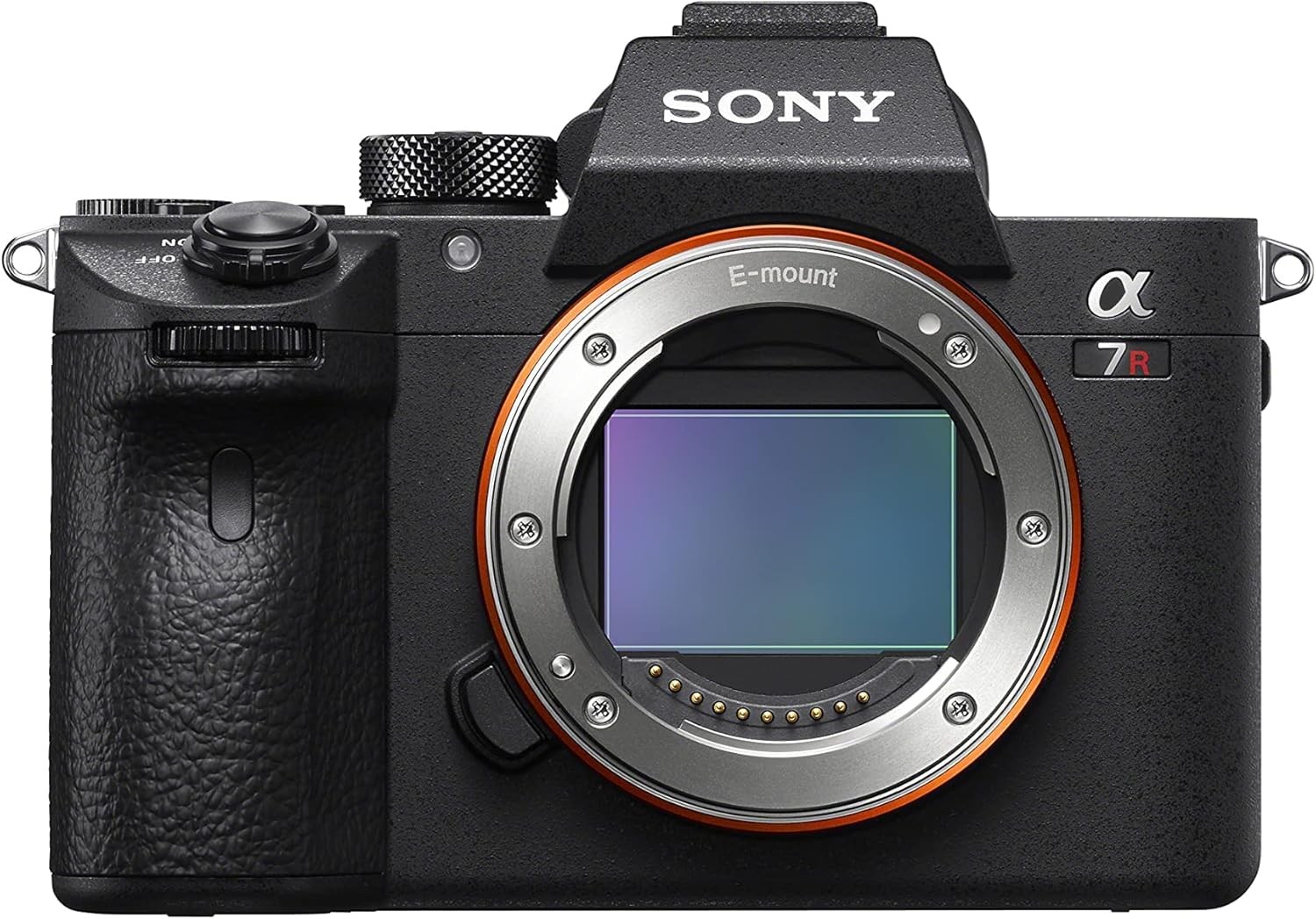
See Sony Alpha a7R IV A Full-Frame Mirror… on AmazonFinding the right full-frame mirrorless body inside Sony’s lineup takes more than scanning a spec sheet. The a7 IV sits at the center of Sony’s Sony Cameras ecosystem , balancing resolution, speed, and video capability in a way that serves a wide range of buyers without demanding a specialist commitment. The question is which version of this camera, and which purchase configuration, actually fits how you shoot.
This guide covers the three main ways to buy the a7 IV body, evaluates what each configuration adds or omits, and frames the decision against the criteria that matter most: sensor output, autofocus reliability, video spec, and long-term ecosystem fit.
What to Look For in a Full-Frame Mirrorless Camera
Sensor Resolution and Dynamic Range
Resolution is the first number buyers fixate on, and for good reason , it sets a ceiling on how much you can crop, how large you can print, and how much flexibility you have in post. The a7 IV’s 33-megapixel BSI CMOS sensor sits in a practical middle ground: it captures substantially more detail than the 24-megapixel bodies that defined the previous generation, without generating the file sizes that make high-resolution shooting logistically demanding.
Dynamic range matters as much as raw resolution for most working conditions. DPReview’s sensor analysis places the a7 IV among the top performers in its class for shadow recovery , a practical advantage for photographers shooting in mixed light, backlit situations, or any environment where exposure latitude is a real editorial concern. Buyers who shoot landscapes, events, or documentary work will feel this in their editing workflow more than they will in any lab measurement.
The relationship between resolution and downstream use is worth thinking through before you buy. Photographers who deliver files primarily for web or social use, and who crop rarely, may find the resolution advantage less meaningful than buyers who print at large scale or license images for editorial use.
Autofocus: Real-World Reliability vs. Specification Claims
Autofocus specifications are among the most difficult to evaluate on paper. Phase-detect coverage percentages and tracking algorithm names mean very little without an understanding of how the system performs on the subjects you actually photograph. The a7 IV uses Sony’s AI-based subject recognition system, which covers humans, animals, birds, and vehicles , and owner consensus across r/SonyAlpha and dedicated review communities consistently places its real-world reliability among the strongest in its price tier.
Eye-AF performance, specifically, has become a baseline expectation at this level. What separates the a7 IV from earlier Sony bodies is not that it has eye-tracking but that it maintains lock through subject movement, partial occlusion, and challenging light. Photographers shooting portraits, events, or moving subjects in unpredictable environments will notice the difference immediately when switching from an older body.
Video Specification and Practical Usability
The a7 IV records 4K video at up to 60fps using a full-pixel readout , a meaningful distinction from cameras that apply a crop at higher frame rates. This matters for run-and-gun video work and hybrid photographers who need their footage to match the field of view of their stills glass.
Practical usability goes beyond the frame rate and codec. Heat management, battery life in video mode, log profile availability, and external recording compatibility are the factors that determine whether a camera works reliably on a shoot. The a7 IV supports S-Log3, outputs clean HDMI to an external recorder, and manages heat acceptably for typical shooting sessions. For buyers who need to shoot extended takes, this is worth researching in the context of your specific ambient temperature conditions , community reports indicate thermal limits under sustained load in warm environments.
Menu System and Ergonomic Familiarity
Sony’s menu system has improved substantially across generations, but it still requires deliberate investment from new users. The a7 IV introduced a revised menu architecture that existing Sony shooters will navigate more quickly than first-time buyers. The physical body layout , grip depth, button placement, rear dial positioning , has been widely praised by photographers migrating from Sony APS-C bodies or from competing full-frame systems.
Customization depth is a genuine advantage for experienced photographers who want to build a button layout that fits their shooting style. The learning curve is real but finite. Most photographers reporting difficulty in community discussions describe a settling-in period of a few weeks rather than a persistent frustration. Buyers new to mirrorless entirely should factor that transition into their evaluation , this is not a body that requires exceptional technical acumen, but it rewards systematic setup. Exploring the full range of Sony mirrorless camera options before committing to a configuration is time well spent.
Top Picks
Sony Alpha 7 IV Full-frame Mirrorless Interchangeable Lens Camera
The Sony Alpha 7 IV Full-frame Mirrorless Interchangeable Lens Camera is the cleanest entry point into the a7 IV platform , body only, no bundled accessories, designed for buyers who are either expanding an existing Sony kit or building a system with deliberate component choices.
The 33-megapixel BSI sensor is the centerpiece of the purchase. Verified buyers across multiple review platforms consistently note the sensor’s shadow recovery performance as a practical differentiator from the previous 24-megapixel generation , particularly in high-contrast outdoor environments and mixed indoor lighting. Color science is a frequent secondary commendation, with Sony’s rendering receiving positive notes from portrait and event photographers alike.
Autofocus is where owner reports become most enthusiastic. The AI subject recognition tracks humans and animals with the kind of consistency that earlier Sony bodies achieved only intermittently. For portrait photographers, the eye-AF reliability in particular has shifted from a feature that required careful management to one that works without active monitoring. That shift changes how you shoot , you’re spending less attention managing focus acquisition and more on composition and timing.
The menu system’s learning curve is the most consistent friction point in owner feedback. New Sony users describe the first few sessions as requiring patience. The body’s physical ergonomics, however, receive almost uniformly positive notes , the grip depth and button layout are well-suited to extended handheld shooting, and the weather sealing adds confidence in field conditions.
Check current price on Amazon.
Alpha a7 IV Full Frame Mirrorless Interchangeable Lens Digital 4K Camera, Black , Bundle
The Alpha a7 IV Full Frame Mirrorless Interchangeable Lens Digital 4K Camera Bundle packages the same a7 IV body with a 256GB SD card, an extra battery, and a camera backpack , a configuration aimed at buyers who are starting from scratch or transitioning from a different system and don’t want to source accessories separately.
The practical value of this configuration depends heavily on which accessories you already own. For a first-time full-frame buyer with no existing Sony infrastructure, the included SD card and spare battery address two purchases that would otherwise be immediate follow-ons. The a7 IV is demanding on battery life by modern mirrorless standards, and owner reports regularly cite the need for at least one spare battery as an early lesson. Having that spare included removes a common early friction point.
The backpack inclusion is more variable in its appeal. Camera backpack preferences are highly personal , fit, access design, and capacity relative to your kit are factors the bundle cannot account for. Buyers with strong preferences on bag design should weigh whether the included pack is a value-add or a sunk cost. The SD card and extra battery are the components of this bundle that carry unambiguous utility.
Video capability mirrors the body-only version precisely. The 4K 60fps full-pixel readout, S-Log3 support, and clean HDMI output are present in identical form. For hybrid shooters evaluating this bundle specifically for video use, the 256GB card is a meaningful inclusion , high-bitrate 4K footage fills cards quickly, and having additional capacity from day one is a practical advantage.
Check current price on Amazon.
Sony Alpha a7R IV A Full-Frame Mirrorless Camera Body
The Sony Alpha a7R IV A Full-Frame Mirrorless Camera Body is a different camera with a different mission , and including it in this comparison requires being direct about the distinction. The a7R IV A carries a 61-megapixel sensor, placing it in Sony’s resolution-specialist tier rather than the generalist tier that the a7 IV occupies. Buyers evaluating this body are making an explicit trade toward maximum detail capture.
Owner reports confirm the sensor’s output in controlled and semi-controlled shooting conditions: landscape photographers and studio-based portrait shooters consistently cite the resolving power as a genuine leap over the a7 IV. The downstream implications are equally consistent , larger raw files, greater demands on storage and processing hardware, and more meaningful lens quality requirements. The 61-megapixel sensor will expose optical weaknesses in lenses that a 33-megapixel sensor will not.
Autofocus has improved meaningfully in the a7R IV A versus earlier a7R-series bodies. The subject tracking and eye-AF reliability are closer to the a7 IV standard than early a7R IV adopters experienced , a software-driven improvement that makes the body viable for more than static subjects. It is not the tracking leader at this tier, but it is no longer a specialist limitation.
The menu system critique that applies to the a7 IV applies equally here. New Sony users should anticipate the same investment in setup and familiarization. For buyers who are choosing between the a7 IV and the a7R IV A, the core question is whether maximum resolution is a genuine operational requirement or a specification aspiration. If you print at very large scale, license images editorially, or work in contexts where heavy cropping is routine, the case for the resolution premium is strong. For most photographers whose work is primarily event, portrait, travel, or documentary, the a7 IV’s 33 megapixels is the more practical choice.
Check current price on Amazon.
Buying Guide
Which a7 IV Configuration Fits Your Situation
The choice between the body-only and bundle configurations is simpler than it might appear. Buyers with an existing Sony kit , or who have already sourced high-capacity cards and spare batteries , gain little from the bundle’s accessories. Buyers entering the Sony ecosystem for the first time, particularly those migrating from a DSLR or a different mirrorless system, will find the bundle’s components reduce the list of first-week purchases meaningfully.
The backpack component of the bundle is the least universally useful element. If you have strong preferences on camera bag design, account for that honestly before treating the bundle as a straightforward value comparison.
The a7 IV vs. the a7R IV A: Who Needs 61 Megapixels
The resolution difference between the a7 IV and a7R IV A is not abstract , it changes file size, storage requirements, editing hardware demands, and the quality threshold required of lenses. The a7R IV A is the right answer for photographers whose work has a genuine need for maximum detail: large-format printing, stock licensing at high resolution, or heavy-crop workflows where image quality at the crop is the deliverable.
For the majority of photographers evaluating these two bodies, the a7 IV’s 33 megapixels is the more functional choice. It produces files that are faster to process, more forgiving of modest lenses, and entirely adequate for any output format that most photographers work in. The resolution premium in the a7R IV A commands a real cost in operational overhead , that overhead only justifies itself if the output genuinely requires it.
Autofocus: What the Specification Actually Means in Practice
Sony’s AI subject recognition system is meaningfully different from the phase-detect implementations in earlier generations. The practical distinction is consistency , the system maintains tracking through the kinds of conditions, subject movement, and partial occlusion that caused older systems to break lock. Community reporting in r/SonyAlpha is the most reliable source of real-world performance data on this; the consensus is that the a7 IV’s tracking is reliable enough that most photographers stop thinking about it as a variable.
Eye-AF specifically has become predictable rather than conditional. For portrait and event photographers, this matters operationally , you can place focus on the subject’s eye and trust it to stay there through moderate subject movement without active intervention.
Ecosystem Investment and Lens Compatibility
Both the a7 IV and a7R IV A use the Sony E-mount, which provides access to the full range of Sony FE lenses as well as third-party options from Sigma, Tamron, and others. This ecosystem depth is one of the strongest arguments for choosing Sony as a platform , the lens selection is among the most developed in the full-frame mirrorless category, and the mount’s flange distance supports third-party adapters for legacy glass.
Buyers coming from A-mount Sony bodies or from Canon and Nikon DSLR systems should evaluate the lens transition cost as part of the total purchase. Adapters exist and generally perform well, but native FE glass will deliver the full autofocus and image stabilization performance the body is capable of. Budgeting for at least one native FE lens alongside the body purchase is the more practical approach than planning to adapt legacy glass indefinitely. Browsing the broader range of Sony mirrorless bodies alongside the lens ecosystem will give a clearer picture of the total investment involved.
Video: Hybrid Use vs. Dedicated Video Work
The a7 IV’s video specification is strong for hybrid use , photographers who shoot stills primarily and need reliable video capability for client work, social content, or documentary documentation. The 4K 60fps full-pixel readout, S-Log3 profiles, and clean HDMI output cover the requirements of most hybrid shooters without significant compromise.
For buyers whose primary output is video , who will be shooting extended takes, working in warm environments, or requiring specific codec options not available in-camera , the a7 IV is capable but not purpose-built. Community reporting on thermal performance under sustained video load is worth reading before committing if extended recording sessions are central to your use case. Dedicated video bodies from Sony’s Cinema Line offer more robust sustained recording specifications for buyers whose primary work is video rather than stills.
Frequently Asked Questions
What is the difference between the a7 IV body-only and the bundle version?
The bundle version packages the same a7 IV body with a 256GB SD card, an extra battery, and a camera backpack. The camera hardware is identical in both configurations. The body-only version is the better choice for photographers who already own compatible accessories; the bundle provides meaningful value for buyers starting without any existing Sony infrastructure. The extra battery in particular addresses a genuine early need, since the a7 IV’s battery life requires a spare for full-day shooting.
Is the Sony a7 IV good for video as well as photography?
The a7 IV handles hybrid work well. It records 4K at up to 60fps using a full-pixel readout, supports S-Log3 for log footage, and outputs clean HDMI to an external recorder. Verified buyers who use the camera for event documentation, social content, and short-form video consistently report strong results. Buyers who need to shoot extended, continuous video takes should investigate community reports on thermal performance before committing, as sustained load in warm conditions can trigger limits.
How does the a7R IV A compare to the a7 IV for portrait photography?
The Sony Alpha a7R IV A offers 61 megapixels versus the a7 IV’s 33, which delivers greater cropping flexibility and larger print capability. For portrait work delivered digitally or printed at standard sizes, the a7 IV’s resolution is fully adequate and produces files that are faster to process. The a7R IV A makes the most sense for portrait photographers who license images at high resolution, print very large, or routinely crop significantly in post. Most portrait shooters will find the a7 IV the more practical daily-use choice.
Does the Sony a7 IV work with older Sony A-mount lenses?
The a7 IV uses the Sony E-mount, which is not natively compatible with older A-mount lenses. Sony’s LA-EA5 adapter enables A-mount glass on E-mount bodies, including phase-detect autofocus with compatible lenses. Performance varies by lens, and native FE-mount lenses will deliver the full autofocus capability the body is capable of. Buyers with a significant A-mount investment should evaluate the adapter route honestly , for most photographers, transitioning to native FE glass over time is the better long-term approach.
Is the a7 IV’s menu system difficult to learn?
The menu system has a genuine learning curve, particularly for buyers new to Sony. The a7 IV introduced a revised architecture that is more logical than previous Sony menu systems, but it still requires deliberate setup investment before the body performs intuitively. Most photographers in community discussions describe the adjustment period as a few weeks of consistent use. Sony’s custom button system is extensive, and building a layout suited to your shooting style is the most effective way to reduce day-to-day menu navigation.
Sony Alpha a7R IV A Full-Frame Mirrorless Camera Body (ILCE7RM4A/B): Pros & Cons
- Strong autofocus with subject tracking
- Excellent video capabilities
- Menu system has a learning curve for new users
Where to Buy
Sony Alpha a7R IV A Full-Frame Mirrorless Camera Body (ILCE7RM4A/B)See Sony Alpha a7R IV A Full-Frame Mirror… on Amazon