
Sony A7 IV with 28-70mm Lens Review: Full-Frame Tested

Affiliate disclosure: Some links on this page are affiliate links. If you buy through them we earn a small commission at no extra cost to you. Recommendations are research-driven; we don't claim personal use of every product reviewed. Product prices and availability are accurate as of the date published and are subject to change. Always check Amazon for current pricing before purchasing. Learn more.

Strong autofocus with subject tracking
See Alpha a7 IV Full Frame Mirrorless Int… on AmazonThe Sony A7 IV with the 28-70mm kit lens is one of the most-searched full-frame mirrorless configurations on the market right now, and for good reason. It packages a 33-megapixel BSI-CMOS sensor, Sony’s most capable subject-tracking autofocus, and genuine hybrid video credentials into a body that sits at the center of the Sony Cameras ecosystem.
Choosing between the body-only listing, the kit bundle, or a certified renewed unit involves more than price. Each option suits a different buyer profile, and understanding the trade-offs before committing is worth the research time.
What to Look For in a Full-Frame Mirrorless Camera
Sensor Resolution and Dynamic Range
The jump to a 33-megapixel BSI-CMOS sensor , the same design class used in Sony’s higher-tier bodies , matters for two reasons. First, it gives landscape and portrait shooters enough resolution to crop aggressively without sacrificing print or display quality. Second, BSI architecture improves light-gathering efficiency at the pixel level, which translates to cleaner shadow recovery and more usable dynamic range in mixed-light situations.
Owner reports and DPReview’s A7 IV testing data consistently show the sensor performing competitively against APS-C and other full-frame alternatives in its class. For photographers who regularly shoot in difficult light , weddings, indoor sports, dim interiors , the full-frame advantage compounds meaningfully at higher ISO settings.
Autofocus System
Sony’s Real-time Tracking and Real-time Eye AF are the features most buyers focus on, and correctly so. The A7 IV’s autofocus system covers 759 phase-detection points across approximately 94% of the image frame. In practice, this means subject lock-on is fast and rarely confused by overlapping elements in the scene.
Verified buyers shooting wildlife and event photography note that the eye-detection reliability is high across human subjects. Animal eye-detection , introduced in later firmware , extends that reliability to pet and wildlife work. The system handles erratic subject movement better than competing systems at this level, according to community field reports from r/SonyAlpha.
Video Specifications
The A7 IV records 4K video from a Super 35 crop or , at reduced frame rates , from the full sensor width. Oversampled 4K from a 7K sensor read produces noticeably sharper footage than cameras that merely crop a 4K window. S-Log3 and S-Cinetone profiles give colorists significant latitude in post.
The body supports 10-bit 4:2:2 color internally, which is the threshold serious hybrid shooters need for professional-grade grading. The practical implication: footage from this camera holds up in color correction workflows that would break 8-bit footage. Audiophiles and run-and-gun videographers also benefit from the full-size HDMI port and 3.5mm headphone jack, both present on the A7 IV body.
Ergonomics and Menu System
The A7 IV body introduced a redesigned menu architecture compared to earlier Sony bodies , a genuine improvement, but still a system that rewards patience at the start. New Sony users consistently flag the menu depth as a learning curve. Experienced Sony shooters find it logical once internalized.
The grip is deeper than the A7 III’s, and most shooters with medium to large hands report a comfortable hold during extended sessions. The addition of a dedicated still/video/S&Q selector dial reduces fumbling between shooting modes, which is a practical ergonomic win for hybrid users. Exploring the broader range of Sony mirrorless options before settling on this body is worth doing if ergonomics are a primary concern , the A7C series, for example, uses a significantly different form factor.
Ecosystem and Lens Compatibility
The A7 IV uses the Sony E-mount, which at this point has one of the deepest native lens libraries in mirrorless. From the budget-friendly G-series zooms to the premium G Master primes, the investment in glass compounds over time. The 28-70mm kit lens is a competent starting point , sharp in the mid-range, with some softness at the corners wide open , but it is not the reason to buy this camera.
The ecosystem argument is about trajectory. A buyer who starts here has a clear upgrade path to better glass without switching systems. That is a meaningful consideration for photographers who expect their kit to evolve over several years.
Top Picks
Sony Alpha a7 IV Full Frame Mirrorless , Bundle
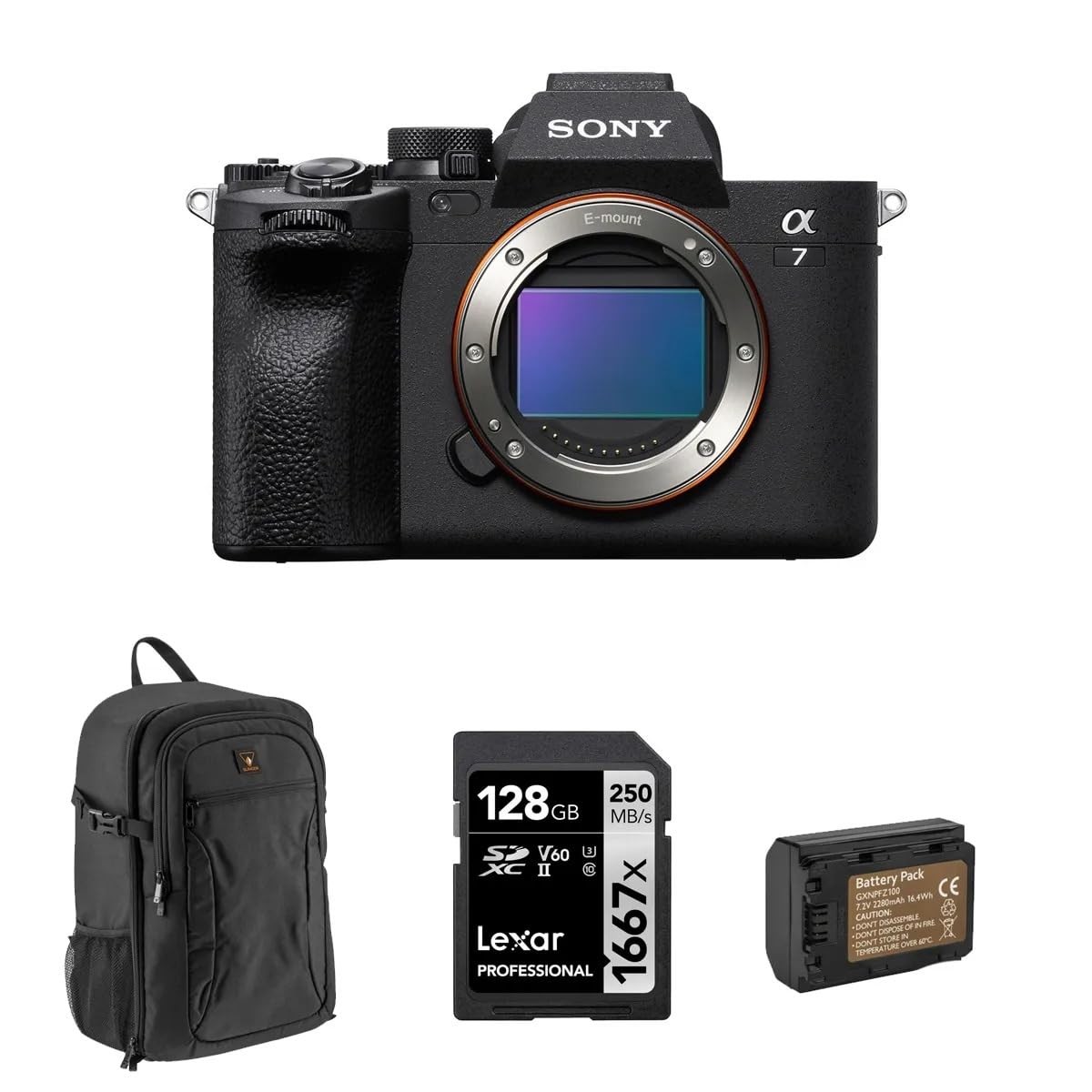
The bundle configuration makes the most sense for buyers who are new to full-frame mirrorless and want to start shooting without a secondary parts order. The Alpha a7 IV Full Frame Mirrorless Interchangeable Lens Digital 4K Camera Bundle includes a 256GB SD card, an extra battery, and a camera backpack alongside the body and kit lens , all items that a first-time buyer will need within the first week anyway.
The extra battery inclusion is particularly practical. The A7 IV’s rated battery life is around 520 shots per charge using the viewfinder, which is competitive but not exceptional by full-frame standards. Real-world shooting , especially with heavy autofocus tracking or video , tends to come in lower. Having a second battery in the bag from day one removes a common frustration point.
The backpack included in this bundle varies by seller, so buyers should verify the exact model. That caveat aside, for photographers stepping up from APS-C or a smartphone and looking for a comprehensive starting kit, the bundle provides genuine value without requiring immediate additional purchases. Verified buyers report the 256GB card capacity as more than sufficient for a full-day shoot in RAW.
Check current price on Amazon.
Sony Alpha 7 IV Full-frame Mirrorless Interchangeable Lens Camera
The body-only and kit-lens listing is the right choice for buyers who already have E-mount glass or who plan to purchase their own preferred optics separately. The Sony Alpha 7 IV Full-frame Mirrorless Interchangeable Lens Camera delivers the same 33-megapixel BSI-CMOS sensor, Real-time Tracking autofocus, and 4K 10-bit internal video as all A7 IV configurations , the distinction is purely in what arrives in the box.
Photographers migrating from an A7 III, an A6000-series body, or another E-mount system will find the sensor and autofocus system a clear step up. The 759-point phase-detection system and improved subject recognition are particularly meaningful for event and portrait photographers who rely on consistent, hands-off focus performance during fast-moving situations.
For buyers who are genuinely evaluating this body against other full-frame Sony options, the A7 IV sits between the A7C II (more compact, slightly different ergonomics) and the A7R V (61 megapixels, higher resolution ceiling) in Sony’s current lineup. The A7 IV resolves the resolution-versus-usability trade-off well for the majority of buyers , 33 megapixels is substantial without creating the file management burden of the R-series bodies. Owner consensus in r/SonyAlpha points to this as the clearest all-around recommendation in the current Sony full-frame lineup for hybrid shooters.
Check current price on Amazon.
Sony Alpha 7 IV Full-frame Mirrorless Interchangeable Lens Camera (Renewed)
The certified renewed listing is the option that rewards buyers who have done their research. The Sony Alpha 7 IV Full-frame Mirrorless Interchangeable Lens Camera (Renewed) delivers the same sensor performance, autofocus system, and video specification as the new retail unit , the difference is provenance and cosmetic condition, not capability.
Sony-certified renewed units go through a refurbishment and inspection process. For buyers who are comfortable with that sourcing , and who have verified the warranty terms for the specific renewed listing , this configuration makes the A7 IV accessible at a lower outlay while retaining full system capability. The trade-off is cosmetic: renewed units may show minor wear that would not be present on a new body.
The renewed option is most appropriate for experienced camera buyers who understand what certified refurbishment means, have confirmed the seller’s return policy, and are prioritizing maximum capability within a tighter premium budget. Photographers who are new to the Sony system and have no established repair-and-return experience may prefer the certainty of a new retail unit , the peace of mind is a legitimate consideration, not just marketing.
Check current price on Amazon.
Buying Guide
Choosing Between the Three A7 IV Listings
They are the same camera in three different configurations: bundled with accessories, sold as a standard retail unit, and offered as a certified renewed unit. The buying decision reduces to what the buyer already owns and their tolerance for refurbished hardware.
Buyers with an existing E-mount lens collection should default to the standard retail body. Buyers starting from zero benefit from the bundle’s accessory package. Buyers who are experienced with refurbished electronics and want to maximize what they get for their outlay should evaluate the renewed listing carefully against the current pricing spread between options.
Autofocus Needs by Shooting Style
Not every buyer needs the full depth of Sony’s Real-time Tracking system. Landscape photographers, architecture shooters, and studio portrait photographers may find that almost any modern mirrorless body’s autofocus is sufficient for their work. The A7 IV’s tracking system is most meaningfully differentiated for action, wildlife, event, and candid shooting , scenarios where subjects move unpredictably and manual focus selection is impractical.
For buyers in those categories, the A7 IV’s subject recognition and eye-detection are genuine workflow improvements over older autofocus implementations. For buyers who primarily shoot static subjects, the autofocus advantage is real but less decisive. Understanding which category you fall into prevents paying a premium for a feature set you may not fully use.
Video Versus Stills Priority
The A7 IV’s 10-bit 4:2:2 internal recording and S-Log3 profile are specifications that matter for professional video work. For buyers whose primary output is still photography with occasional video, those specifications represent headroom that may never be used , and that is fine. The stills performance is strong enough to justify the body on its own merits.
The body does not provide unlimited 4K recording time in all configurations , thermal management applies restrictions during long continuous takes. Buyers who need extensive run-and-gun video recording should research current firmware notes before committing. Hybrid shooters doing short clips and BTS footage will not encounter this as a practical constraint.
Lens Kit Decision
The 28-70mm f/3.5-5.6 OSS kit lens is a reasonable starting optic for general photography, and the focal range covers the most common shooting scenarios. Its limitations , variable maximum aperture, modest low-light performance at the long end, corner softness wide open , become apparent when compared against Sony’s mid-tier zoom offerings.
Buyers who are serious about the system should treat the kit lens as a temporary starting point rather than a long-term solution. The 28-70mm provides enough coverage to learn the body while the buyer evaluates which prime or zoom lens suits their actual shooting patterns. More detailed context on lens pairing decisions is available across the full Sony mirrorless camera range.
Menu System and Learning Curve
Sony’s menu system on the A7 IV is deeper than most competing systems at this tier. The initial configuration , setting up custom buttons, establishing shooting profiles, confirming autofocus settings , takes several hours of deliberate setup time. Buyers who are unwilling to spend time on initial configuration will find the camera frustrating in its out-of-box state.
The practical mitigation is straightforward: allocate a weekend to setup before taking the camera into a live shooting situation. Sony’s own tutorial resources and the r/SonyAlpha community both provide clear guidance on recommended initial configuration. After setup, the custom button system becomes a genuine efficiency tool , but the investment is required upfront.
Frequently Asked Questions
What is the difference between the A7 IV bundle and the standard A7 IV listing?
The bundle adds a 256GB SD card, a second battery, and a camera backpack to the standard body-and-kit-lens configuration. The camera hardware , sensor, autofocus system, video spec , is identical across both listings. Buyers who already own compatible accessories will not gain meaningful value from the bundle; buyers starting from scratch will find the included items genuinely useful from the first shoot.
Is the Sony A7 IV a good camera for beginners coming from a smartphone or entry-level APS-C?
The A7 IV is a capable but demanding first full-frame camera. The autofocus system handles the technical side of focus reliably, which lowers one barrier for newer photographers. The menu depth and the number of configurable options, however, require a deliberate learning investment. Buyers willing to spend time on setup and study will grow into the camera’s capabilities; buyers expecting a point-and-shoot experience will likely find the learning curve steep initially.
How does the A7 IV compare to the A7 III for photographers considering an upgrade?
The A7 IV offers a substantially improved sensor , 33 megapixels versus 24 , along with a more capable autofocus system, 10-bit internal video recording, and a redesigned menu architecture. For photographers who shoot events, portraits, or any subject-tracking scenario, the autofocus improvements alone represent a meaningful upgrade. A7 III shooters who are satisfied with 24 megapixels and rarely push autofocus tracking in difficult conditions may find the upgrade less compelling.
Does the Sony A7 IV overheat during extended video recording?
The A7 IV has thermal management limits that apply during long continuous 4K recording, particularly in warmer environments. For short-form video, interviews, and BTS work , typical hybrid photographer use cases , the limits are rarely encountered in practice. Buyers who need to record extended continuous takes, such as full-length event coverage or interview sessions longer than 30 minutes, should review current firmware release notes and community field reports for up-to-date recording limit data.
Is the certified renewed A7 IV a reliable purchase compared to a new retail unit?
Sony-certified renewed units go through an inspection and refurbishment process before resale. Verified buyers who have purchased renewed Sony bodies report that functional performance matches new units; the primary difference is cosmetic wear and the sourcing history. The key variables are the specific seller’s warranty coverage and return policy , buyers should confirm both before purchasing. Experienced camera buyers comfortable with refurbished electronics generally report positive outcomes; first-time full-frame buyers may prefer the certainty of a new retail unit.
Sony Alpha a7 IV Full Frame Mirrorless Interchangeable Lens Digital 4K Camera, Black - Bundle with 256GB SD Memory Card, Extra Battery, Camera Backpack, Sony 1 Year Limited Warranty: Pros & Cons
- Strong autofocus with subject tracking
- Excellent video capabilities
- Menu system has a learning curve for new users
Where to Buy
Sony Alpha a7 IV Full Frame Mirrorless Interchangeable Lens Digital 4K Camera, Black - Bundle with 256GB SD Memory Card, Extra Battery, Camera Backpack, Sony 1 Year Limited WarrantySee Alpha a7 IV Full Frame Mirrorless Int… on Amazon