
Fujifilm X-H2 Mirrorless Camera Review: 40MP APS-C

Affiliate disclosure: Some links on this page are affiliate links. If you buy through them we earn a small commission at no extra cost to you. Recommendations are research-driven; we don't claim personal use of every product reviewed. Product prices and availability are accurate as of the date published and are subject to change. Always check Amazon for current pricing before purchasing. Learn more.

Film simulation modes for in-camera JPEG quality
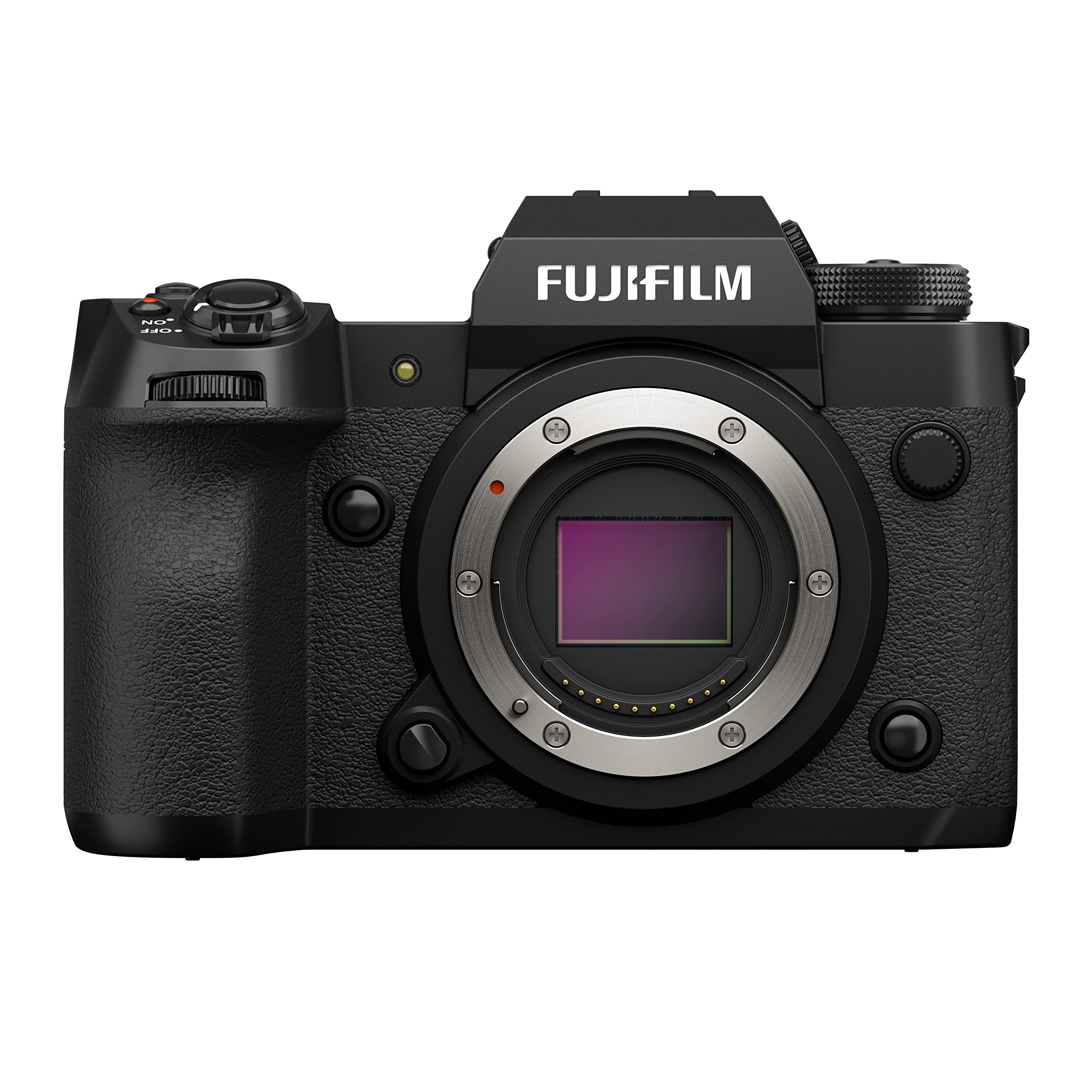
See Fujifilm X-H2 Mirrorless Camera Body … on AmazonThe Fujifilm X-H2 sits at an interesting intersection: a high-resolution APS-C body with professional ergonomics, targeted at photographers who want serious image quality without committing to a full-frame system. The 40.2-megapixel X-Trans CMOS 5 HR sensor, in-body stabilization, and Fujifilm’s film simulation rendering make it one of the more complete camera bodies in the Fujifilm cameras lineup. The question is whether it fits your specific shooting needs , and how it compares to the X-T5, which shares the same sensor in a very different body.
Sensor performance, autofocus capability, body design, and lens ecosystem are the four factors that determine whether this camera earns its premium positioning. Each of those variables lands differently depending on what you shoot, how you shoot it, and which lenses you already own.
What to Look For in a High-Resolution APS-C Camera
Sensor Resolution and File Pipeline
Forty megapixels on an APS-C sensor is a substantial commitment. The resolution ceiling benefits landscape, architecture, and detail-intensive studio work , but it also means larger raw files, more demanding storage, and processing software that can handle the X-Trans color filter array without introducing artifacts. Adobe Lightroom and Capture One both support X-Trans processing competently, but the X-Trans demosaicing pipeline is slower and more resource-intensive than Bayer processing at equivalent resolution. If your workflow is primarily JPEG-out-of-camera, this matters less , Fujifilm’s in-camera JPEG rendering is genuinely good, and the film simulations can function as a finished output at full resolution.
The sensor architecture also affects high-ISO rendering. X-Trans noise has a different character than Bayer noise , more film-like, less blocky , which suits the aesthetic many Fujifilm shooters are after. DPReview’s test results consistently show competitive dynamic range at base ISO across both the X-H2 and X-T5, with the expected performance trade-offs appearing at ISO 3200 and above.
In-Body Image Stabilization
IBIS implementation varies significantly across camera bodies, and the X-H2’s seven-stop rated stabilization is among the strongest in the APS-C segment. For photographers shooting handheld in low light , event work, travel, interior architecture , IBIS reach matters as much as high-ISO performance, sometimes more. The X-T5’s IBIS system is rated at seven stops as well, but the X-H2’s larger body allows for a more robust mechanical implementation that many photographers find performs more consistently in practice, particularly with longer focal lengths.
Understanding which lenses benefit most from IBIS is worth attention before purchase. Fujifilm’s optically stabilized XF lenses coordinate with IBIS for dual IS, which extends the effective stabilization range. Primes without optical stabilization benefit most from the body’s IBIS in isolation.
Autofocus Architecture
Subject tracking and phase-detection coverage have improved substantially across Fujifilm’s recent generation. The X-H2 uses a 5.76 million-pixel stacked autofocus sensor with phase detection covering approximately 100 percent of the frame , a meaningful shift from earlier Fujifilm AF systems that frustrated photographers accustomed to Sony or Canon tracking performance. Bird, animal, and vehicle detection are available as dedicated tracking modes. That said, verified buyer reports and community consensus on r/Fujifilm both note that Fujifilm’s subject recognition still lags behind Sony’s latest algorithms in fast, unpredictable action , particularly for sports and wildlife with erratic movement patterns.
For portraiture, street, and moderate-action work, the current AF system performs well and reliably. For dedicated sports or bird-in-flight work, it warrants honest evaluation against your specific subjects.
Body Design and Control Layout
The X-H2 and X-T5 represent two different philosophies within the Fujifilm lineup. The X-H2 prioritizes ergonomics: a deeper grip, larger body, front and rear command dials, and a top-plate LCD that provides shooting data without requiring menu access. The control layout suits photographers coming from Canon or Nikon DSLR workflows. The X-T5 takes the opposite approach , a rangefinder-style body with dedicated shutter speed, ISO, and exposure compensation dials on the top plate, favoring tactile control over menu-driven operation.
Neither approach is objectively superior. The right choice depends on how you learned to operate a camera. Photographers who think in terms of mode dial positions often prefer the X-H2’s layout. Photographers who shoot primarily in aperture-priority or manual with exposure compensation will often find the X-T5’s top plate more natural. Exploring the full range of Fujifilm X-series bodies before committing to one design language is genuinely useful, particularly if you haven’t handled both bodies in person.
Top Picks
Fujifilm X-H2 Mirrorless Camera Body - Black
The Fujifilm X-H2 is the better-suited body for photographers whose work demands versatility across shooting conditions. The larger grip and dual-dial control layout make it comfortable for extended sessions, and the front-facing microphone array and full-size HDMI output address hybrid shooters who move between stills and video regularly. The X-H2 also supports 8K video capture at 30fps , a specification that separates it from the X-T5, which is oriented primarily toward stills.
Owner reports consistently note that the X-H2’s IBIS performs more reliably during video capture than the X-T5’s, which matters for handheld filmmaking at the telephoto end of the zoom range. The top-plate LCD is a practical addition for photographers who shoot in bright daylight and find the rear screen difficult to read at a glance. For photographers building a hybrid workflow , or those who simply want more physical control surface , the X-H2’s body design is the more complete package.
Where the X-H2 concedes ground is in size and weight. It is a noticeably larger body than the X-T5, which affects how naturally it pairs with compact XF primes. Photographers who prioritize discrete, lightweight carry will find the size trade-off meaningful. The 40.2-megapixel sensor performance is otherwise comparable to the X-T5 , both draw from the same X-Trans CMOS 5 HR architecture , so image quality differences between bodies are minor and attributable primarily to processing pipeline and IBIS implementation rather than sensor output.
Check current price on Amazon.
Fujifilm X-T5 Mirrorless Digital Camera Body - Black
The Fujifilm X-T5 is the right choice for photographers who prioritize still-image quality and prefer a compact, tactile body over expanded hybrid capability. The same 40.2-megapixel X-Trans CMOS 5 HR sensor delivers the same resolution ceiling as the X-H2, but in a significantly smaller and lighter chassis , a trade-off that matters for photographers who carry their camera for extended periods or want their body to remain discrete.
The top-plate dial layout is the defining characteristic of the X-T5 experience. Dedicated shutter speed, ISO, and exposure compensation dials mean that exposure settings are readable at a glance without powering the camera on, and that common adjustments happen without menu navigation. Photographers who shoot in aperture-priority or fully manual will find this layout intuitive from the first day. Verified buyers on r/Fujifilm frequently cite the physical control layout as the primary reason they chose the X-T5 over competitive options at the same sensor tier.
The X-T5 does not include a top-plate LCD, offers limited video specification compared to the X-H2, and has a smaller grip that some photographers find less comfortable during long shoots with heavier lenses. These are genuine trade-offs, not minor limitations. For a dedicated stills photographer whose ideal kit pairs a compact body with XF primes, the X-T5 makes a strong case.
Check current price on Amazon.
Fujifilm X-T5 Mirrorless Camera (Silver) with 40MP APS-C X-Trans CMOS 5 HR Sensor, Corel Photo Video Art Suite for Editing, NP-W235 Battery, 64GB Extreme PRO SDXC Card & Camera/Camcorder Gadget Bag
The Fujifilm X-T5 Silver bundle is the same X-T5 body in silver finish, packaged with accessories that address the most immediate practical needs of a new Fujifilm shooter. The Lexar 64GB Extreme PRO SD card, spare NP-W235 battery, and carrying bag cover the gear that most new buyers purchase separately in the first week , consolidating that acquisition into one transaction. The Corel Photo Video Art Suite is included as editing software, though photographers already committed to Lightroom or Capture One will find less value in that component.
The silver colorway suits photographers who want the rangefinder aesthetic to read visually as well as physically. Paired with the silver variants of Fujifilm’s XF prime lenses, the combination has a coherent look that matters to photographers for whom the appearance of the kit is part of the experience. Image quality and operational characteristics are identical to the black X-T5 , the bundle distinction is entirely practical and cosmetic, not performance-based.
For photographers purchasing their first Fujifilm body who don’t already own compatible accessories, the bundle eliminates a handful of parallel purchasing decisions and provides a usable starting point immediately out of the box.
Check current price on Amazon.
Buying Guide
Stills vs. Hybrid Workflows
The most consequential purchasing decision between the X-H2 and X-T5 is workflow orientation. The X-H2 is designed with hybrid shooters in mind , its body architecture, port selection, and video specifications reflect a camera that expects to be used for both stills and video on a regular basis. The X-T5 is a stills-first body; its video capabilities are functional but not a design priority. Photographers who shoot stills exclusively and have no interest in video output will find the X-T5 a more efficient choice.
Hybrid shooters , those who deliver both still images and video content, or who want future flexibility , should weigh the X-H2’s extended video capability more seriously.
Resolution and Storage Planning
Forty megapixels generates substantial files. A single raw file from the X-T5 or X-H2 runs between 70 and 85 megabytes depending on compression settings. Photographers shooting in bursts , or switching from a 24-megapixel camera , should plan for storage and processing capacity before purchase rather than after. The 64GB card included in the X-T5 bundle provides a working starting point, but extended shooting sessions will exhaust that capacity quickly.
Photographers whose primary output is JPEG can mitigate the storage demand through in-camera processing. Fujifilm’s JPEG engine is capable enough that many photographers publish straight from the card without additional post-processing.
Autofocus Expectations by Subject Type
Autofocus performance is often the most oversimplified variable in camera purchasing decisions. The X-H2 and X-T5 both perform reliably for portraiture, street, travel, and moderate-action subjects. For dedicated sports or wildlife photography with fast, erratic subjects, community consensus across r/Fujifilm and comparative reviews consistently places Fujifilm’s subject tracking behind Sony’s and Canon’s current implementations.
Setting accurate expectations before purchase avoids disappointment. Photographers transitioning from a Sony a7R V or Canon R5 will notice a difference in tracking consistency for high-speed subjects. Photographers coming from an older Fujifilm body or a DSLR will likely find the current AF system a meaningful improvement.
Lens Ecosystem Fit
The XF and XC lens mount is a mature system with strong prime coverage and a growing zoom selection. Wide-aperture XF primes , the 23mm f/1.4, 35mm f/1.4, 56mm f/1.2, and 90mm f/2 , are well-regarded optically and pair naturally with the 40-megapixel sensor without becoming the resolving bottleneck. The lens selection is narrower than full-frame systems from Sony or Canon, and photographers who require specialist focal lengths , tilt-shift, supertelephoto, or ultra-wide zoom , will find fewer native options.
Reviewing the available Fujifilm X-mount lenses before committing to a body is practical due diligence, particularly for photographers with specific focal length requirements.
IBIS and Stabilization Planning
Both the X-H2 and X-T5 include seven-stop rated IBIS. In practice, IBIS effectiveness depends on focal length, subject motion, and shooting technique. The X-H2’s larger body provides a more mechanically stable platform for the IBIS unit, which many photographers find translates to more consistent handheld results with longer lenses. For prime lenses in the 35mm, 56mm equivalent range, both bodies perform comparably. For telephoto work at 100mm equivalent and beyond, the X-H2’s IBIS implementation warrants consideration.
Frequently Asked Questions
What is the difference between the Fujifilm X-H2 and X-T5 for still photography?
Both cameras use the same 40.2-megapixel X-Trans CMOS 5 HR sensor, so image quality is comparable between bodies. The key differences are ergonomics and design philosophy: the X-H2 offers a deeper grip and DSLR-style dual-dial controls, while the X-T5 uses dedicated top-plate dials for shutter speed, ISO, and exposure compensation. Photographers who prefer tactile, dial-based operation tend to favor the X-T5, while those wanting a more conventional control layout often prefer the X-H2.
Is the Fujifilm X-H2 good for video as well as photography?
The X-H2 supports 8K video at 30fps and includes a front-facing microphone array and full-size HDMI output , specifications the X-T5 does not match. Verified buyers who work in hybrid roles consistently cite the X-H2 as the better-suited body for combined stills and video workflows. The X-T5 is capable of video capture but is not optimized for it, and serious video work will reveal the X-H2’s more practical port and stabilization implementation fairly quickly.
How does the X-Trans sensor in the X-H2 and X-T5 compare to Bayer sensors?
X-Trans uses a non-repeating color filter array that Fujifilm designed to reduce moiré and improve fine-detail rendering without an optical low-pass filter. The practical consequence is a different noise character , more film-like and less blocky than Bayer noise , and a more demanding raw processing pipeline. Adobe Lightroom and Capture One both handle X-Trans files well, but rendering times are longer than Bayer files at equivalent resolution. Photographers shooting primarily JPEG will notice the difference less, since Fujifilm’s in-camera processing handles the X-Trans demosaicing internally.
Is the Fujifilm X-T5 bundle worth buying over the body-only option?
The Fujifilm X-T5 Silver bundle adds a 64GB SD card, spare NP-W235 battery, carrying bag, and editing software to the body-only purchase. For photographers who don’t already own compatible accessories, the bundle consolidates purchases that most buyers make in the first week anyway. The added value is primarily practical , the editing software is a minor inclusion for photographers already committed to a raw processing workflow, but the extra battery and SD card have immediate utility.
What lenses work best with the 40-megapixel sensor on the X-H2 and X-T5?
High-resolution sensors reveal lens resolving limitations more readily than lower-resolution bodies do. The XF 23mm f/1.4 R LM WR, XF 56mm f/1.2 R WR, and XF 90mm f/2 R LM WR are consistently recommended by the r/Fujifilm community as lenses that match the 40-megapixel sensor’s resolving capability without becoming the optical bottleneck. Older XF lenses from the first generation remain usable but may show softness at the pixel level that wasn’t visible on earlier bodies.
Fujifilm X-H2 Mirrorless Camera Body - Black: Pros & Cons
- Film simulation modes for in-camera JPEG quality
- Compact body with tactile controls
- Smaller lens selection compared to full-frame systems
Where to Buy
Fujifilm X-H2 Mirrorless Camera Body - BlackSee Fujifilm X-H2 Mirrorless Camera Body … on Amazon