Canon 100mm Macro Lens: RF 100mm L and Alternatives

Affiliate disclosure: Some links on this page are affiliate links. If you buy through them we earn a small commission at no extra cost to you. Recommendations are research-driven; we don't claim personal use of every product reviewed. Product prices and availability are accurate as of the date published and are subject to change. Always check Amazon for current pricing before purchasing. Learn more.

Quick Picks
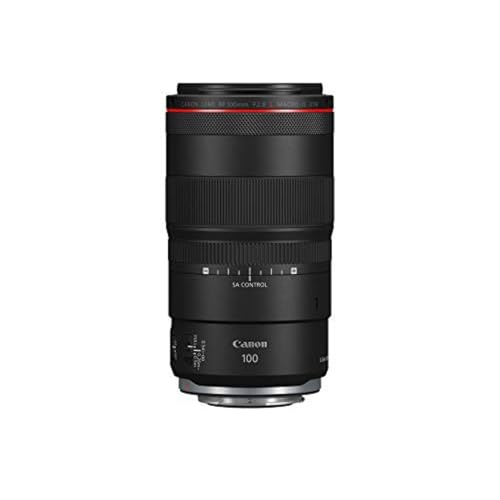
Canon RF100mm F2.8 L Macro is USM Lens
World's first medium telephoto macro lens with 1.4x maximum magnification, exceeding the 1:1 standard
Buy on Amazon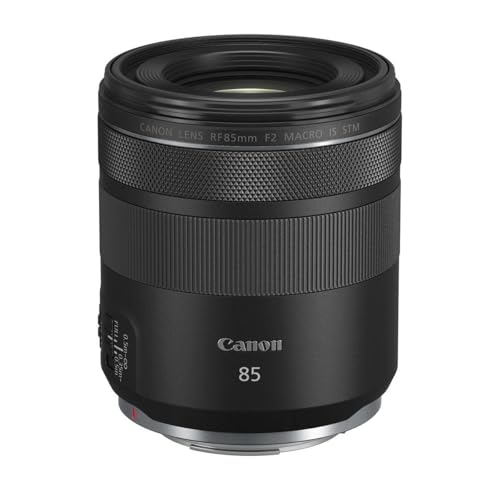
Canon RF85mm F2 Macro is STM Lens
Bright f/2 aperture delivers beautiful bokeh at a more accessible entry point than the L-series
Buy on Amazon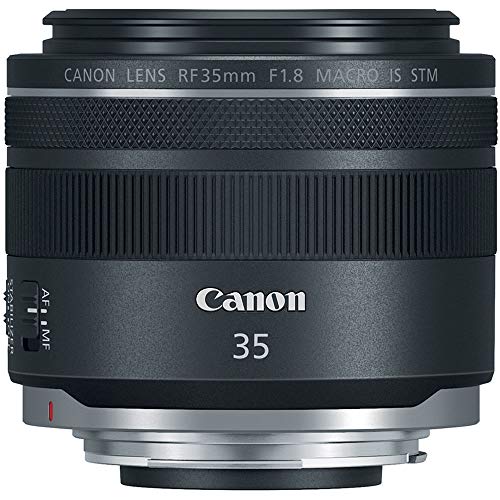
Canon RF35mm F1.8 is Macro STM Lens
Extremely compact with a 0.56 ft. minimum focusing distance, practical for everyday wide-angle shooting
Buy on Amazon| Product | Price Range | Top Strength | Key Weakness | Buy |
|---|---|---|---|---|
| Canon RF100mm F2.8 L Macro is USM Lens best overall | $$$ | World's first medium telephoto macro lens with 1.4x maximum magnification, exceeding the 1:1 standard | A full L-series macro lens comes with a corresponding price and size commitment not every shooter needs | Buy on Amazon |
| Canon RF85mm F2 Macro is STM Lens also consider | $$$ | Bright f/2 aperture delivers beautiful bokeh at a more accessible entry point than the L-series | Maximum magnification of 0.5x falls well short of true 1:1 macro, let alone 1.4x | Buy on Amazon |
| Canon RF35mm F1.8 is Macro STM Lens also consider | $$$ | Extremely compact with a 0.56 ft. minimum focusing distance, practical for everyday wide-angle shooting | 0.5x maximum magnification and 35mm focal length make it a poor substitute for dedicated macro work | Buy on Amazon |
Searching for a Canon 100mm macro lens almost always leads to the same destination: the RF 100mm F2.8 L Macro IS USM. That lens is the definitive answer for Canon RF-mount shooters who want true macro capability at a classic telephoto focal length. Still, two other RF primes — the RF 85mm F2 Macro IS STM and the RF 35mm F1.8 IS Macro STM — appear frequently in macro lenses searches, and understanding exactly where each one fits (and where it does not) matters before spending.
The picks in this guide were chosen by comparing manufacturer specifications and current Amazon listings. This site does not test products. What follows is an honest accounting of what each lens offers on paper, who that specification set serves, and where the trade-offs land — so the decision is yours to make clearly.
Two clarifications worth stating plainly before the lens sections: the RF 85mm is not a 100mm lens, and the RF 35mm is not a 100mm lens. Both are included here because buyers frequently encounter them while searching for a Canon macro option in the telephoto range. Neither is a replacement for the RF 100mm if focal length or maximum magnification is the deciding factor.
What to Look For in a Canon RF Macro Lens
Maximum Magnification
Magnification ratio is the number that separates a genuine macro lens from a lens with close-focus capability. A true 1:1 macro lens renders a subject at life size on the sensor. The Canon RF 100mm F2.8 L Macro goes further, with the manufacturer specifying a maximum magnification of 1.4x — making it the first medium telephoto macro lens in the world to exceed 1:1, according to Canon’s listing. That distinction matters for insect, flower, and product photographers who need to fill the frame with small subjects.
Both the RF 85mm and RF 35mm are specified at 0.5x maximum magnification. That is half life size. For many portrait and general close-focus applications that is sufficient, but it is not macro in the strict sense, and it is not a substitute for 1:1 or 1.4x when fine detail is the goal.
Focal Length and Working Distance
At 100mm, a macro lens provides meaningful physical distance between the front element and the subject at minimum focusing distance. That working distance is practically significant: it reduces the chance of casting a shadow on the subject, gives room to position a ring flash or diffuser, and allows skittish subjects — insects especially — more time before they notice the lens. The 35mm focal length collapses that working distance dramatically. The manufacturer specifies a minimum focusing distance of just 0.56 ft. for the RF 35mm, which means the front element is very close to the subject at full magnification.
The RF 85mm specifies a minimum focusing distance of 1.15 ft. That is more workable than the 35mm, though still shorter than a dedicated 100mm macro. Focal length and working distance are not interchangeable considerations; they shape the entire shooting experience.
Image Stabilization Architecture
All three lenses in this guide include optical image stabilization, and Canon specifies up to five stops of shake correction for each. The distinction worth understanding is what kind of shake correction is relevant for macro work. At high magnifications, shift shake — the lateral movement of the camera relative to the subject — becomes as disruptive as angular shake. The listing for both the RF 100mm L and the RF 85mm explicitly specifies Hybrid IS that compensates for both angular and shift camera shake during macro shooting. That is a meaningful specification for close-focus work, not just a marketing addition.
Aperture and Bokeh Character
A fixed f/2.8 aperture on the RF 100mm L provides strong low-light capability and a shallow depth of field that isolates subjects cleanly. The RF 85mm’s f/2 aperture is a full stop brighter, which matters for available-light portrait work. The RF 35mm’s f/1.8 is brighter still, though at a focal length that changes the rendering perspective considerably.
The RF 100mm L adds a specification none of the others carry: a spherical aberration control ring. The manufacturer describes this as allowing adjustments to the shape and character of foreground and background bokeh. For photographers for whom the quality of out-of-focus rendering is as important as sharpness, that control is genuinely unusual at any focal length.
Build Quality and Mount Tier
The RF 100mm F2.8 carries Canon’s L-series designation, which signals a specific standard of weather sealing, optical construction, and build durability. The RF 85mm and RF 35mm are STM-motor lenses in Canon’s consumer RF lineup — well-made and capable, but not built to the L-series standard. Whether that distinction justifies the price difference depends entirely on the shooting environment and how hard the lens will work. Exploring the full range of macro lenses in the RF ecosystem is worth doing before committing to a tier.
Top Picks
Canon RF100mm F2.8 L Macro IS USM Lens
The case for the Canon RF100mm F2.8 L Macro IS USM Lens is straightforward: it is the only RF-mount lens that delivers genuine macro performance at the 100mm focal length. According to the manufacturer, it is the world’s first medium telephoto macro lens with a maximum magnification of 1.4x — a specification that places it in a category of its own within the RF system.
The fixed f/2.8 aperture keeps the lens fast enough for natural light macro work, and the manufacturer specifies five stops of optical image stabilization with Hybrid IS that accounts for both angular and shift shake during close-focus shooting. At 1.4x magnification, even minor camera movement translates to significant subject blur, so that IS architecture is doing real work rather than serving as a general-purpose feature.
What genuinely separates this lens from anything else in this guide is the spherical aberration control ring. The listing describes it as allowing adjustments to the shape and character of foreground and background bokeh — a level of creative control over out-of-focus rendering that is rare in any lens category. For product photographers, botanical shooters, and anyone for whom the look of the background is as considered as the sharpness of the subject, that ring adds a dimension of intentionality that no other lens on this list provides.
The commitment here is real. An L-series macro at 100mm is not a compact, lightweight kit addition. For photographers whose work centers on macro or who want a single telephoto prime that excels in multiple roles, the specification set justifies that commitment clearly. For casual close-focus shooters, the lenses below are worth the honest look.
Check current price on Amazon.
Canon RF85mm F2 Macro IS STM Lens
The Canon RF85mm F2 Macro IS STM Lens is not a 100mm lens, and it is not a replacement for the RF 100mm L in macro contexts. That said, it earns a place in this guide because it is the closest thing in the consumer RF lineup to a versatile near-telephoto prime with meaningful close-focus capability — and for buyers whose macro interest is occasional rather than central, the 0.5x maximum magnification the manufacturer specifies may be entirely sufficient.
Where this lens makes its strongest argument is in dual-use shooting. The f/2 aperture is a full stop brighter than the RF 100mm L, producing what the manufacturer describes as beautiful bokeh. At 85mm with a fast aperture, it performs well as a portrait lens, a travel prime, and a general-purpose telephoto — with close-focus capability that handles flowers, food, and product details without needing a dedicated macro setup.
The Hybrid IS specification matches what Canon lists for the RF 100mm L: compensation for both angular and shift camera shake during macro shooting, up to five stops. For 0.5x work, that IS performance is more than adequate. The honest limitation is the magnification ceiling. Buyers who anticipate needing life-size or beyond should account for that ceiling now rather than later.
Check current price on Amazon.
Canon RF35mm F1.8 IS Macro STM Lens
The Canon RF35mm F1.8 IS Macro STM Lens is the lens most likely to appear in a Canon macro search that least belongs there, and clarity about its role is more useful than a soft endorsement. It is a compact 35mm prime with a 0.5x maximum magnification — the same ceiling as the RF 85mm — and a minimum focusing distance the manufacturer specifies at 0.56 ft. At that distance, the lens is extremely close to the subject.
For general photography, the RF 35mm makes considerable sense. It is compact, carries five stops of image stabilization, includes the RF control ring for direct setting changes, and covers a focal length that many shooters use as a daily prime. The close-focus capability is a genuine benefit for environmental detail shots, product context images, and casual use cases where getting moderately close is the goal.
As a macro tool in any strict sense, or as a substitute for a 100mm focal length in telephoto macro work, the case does not hold. The working distance at minimum focus is short enough to create consistent lighting challenges, and 35mm perspective distortion at close range changes how subjects render in ways that 85mm or 100mm does not. This lens belongs in a kit for the versatility it brings to wide-angle shooting — not as a macro workaround.
Check current price on Amazon.
Buying Guide
Deciding Whether You Need True Macro
The first decision is whether the work actually requires 1:1 or greater magnification. Many photographers describe themselves as interested in macro when what they want is close-focus capability — the ability to focus tightly on a flower, a food detail, or a small product without meaning to fill the frame with a subject measured in millimeters. For that use case, the 0.5x lenses in this guide are functionally adequate.
If the subject is an insect at rest, a coin’s surface relief, a watch movement, or similarly fine detail that must fill the frame, 0.5x is not the right specification. The RF 100mm L’s 1.4x maximum magnification, as the manufacturer specifies it, is the only option in this RF-mount lineup that resolves that requirement. Identifying which category of work the lens will actually do most of the time saves a significant amount of reconsidering later.
Matching Focal Length to Subject Type
Focal length in macro work carries implications beyond field of view. At 100mm, the camera is far enough from the subject to work without disturbing it — relevant for insects, reptiles, or any subject that reacts to proximity. The working distance at that focal length also provides space for lighting, whether that is a ring flash, a small diffuser, or a reflector positioned below the subject.
At 35mm with a 0.56 ft. minimum focus distance, the front element is centimeters from what it is photographing. That is workable for static subjects in controlled settings and genuinely limiting for anything that moves or reacts. Portrait photographers occasionally consider a 35mm macro for its versatility, and on that axis it delivers — but the macro application is narrow. The best macro lens for a given system is always the one whose focal length fits the actual subjects being photographed.
Understanding What Hybrid IS Does at Close Focus
Image stabilization specifications require context at macro distances. At normal shooting distances, five stops of IS correction is a headline number that describes angular shake compensation. At 0.5x magnification or above, shift shake — the horizontal or vertical drift of the camera relative to the subject — becomes the more disruptive motion type. Canon specifies Hybrid IS on both the RF 100mm L and the RF 85mm, explicitly noting that it compensates for angular and shift camera shake during macro shooting.
The RF 35mm’s listing specifies five stops of optical IS but does not carry the same explicit Hybrid IS specification for macro use. At 0.5x magnification with a 35mm focal length, the practical difference may be minor. At 1.4x magnification with the RF 100mm L, the Hybrid IS specification is doing substantive work that a standard IS system would not replicate equally. Buyers focused on high-magnification shooting should treat the IS architecture specification as a meaningful differentiator, not equivalent across lenses simply because the stop count matches.
L-Series Build Versus Consumer RF Build
Canon’s L-series designation on the RF 100mm F2.8 Macro reflects a different construction standard than the STM-motor consumer lenses. The practical implications include weather sealing relevant in outdoor macro environments — damp forest floors, misty mornings, dusty field conditions — and a build durability suited to regular professional use. The RF 85mm and RF 35mm are well-built lenses for their tier; they are not fragile. But they are not built to the same environmental tolerance standard.
For studio product photographers or indoor food photographers, the L-series weather sealing is largely irrelevant. For natural history shooters working in varied outdoor conditions, it is not. Matching the build specification to the actual shooting environment rather than treating L-series as automatically superior is the more honest frame. An RF 85mm in a protective bag, used primarily indoors, will outlast an RF 100mm L used carelessly outdoors.
Considering the RF 85mm as a Dual-Use Investment
For photographers who want one compact RF prime to handle portraits, travel, and occasional close-focus work, the RF 85mm at f/2 makes a coherent argument that neither the RF 100mm L nor the RF 35mm can replicate. The RF 100mm L is a dedicated specialist. The RF 35mm covers a wide-angle role. The RF 85mm sits between those poles with a focal length useful for portraits and a close-focus specification useful for moderate macro applications.
The trade-off is unambiguous: 0.5x is the magnification ceiling, and it will not move. For a photographer who genuinely needs 1:1 capability, the RF 85mm is a companion lens, not a solution. For a photographer whose macro use is incidental to a primary interest in portraiture or travel photography, buying the specialist RF 100mm L to solve an occasional requirement is a different kind of cost-benefit question. Reviewing the full range of options at the macro lenses hub before finalizing is worth the time when that dual-use calculation is the deciding factor.
Frequently Asked Questions
What is the difference between the Canon RF 100mm F2.8 L Macro and the RF 85mm F2 Macro in terms of magnification?
The RF 100mm F2.8 L Macro IS USM achieves a manufacturer-specified maximum magnification of 1.4x, exceeding true 1:1 macro reproduction. The RF 85mm F2 Macro IS STM is specified at 0.5x — half life size. That gap is not a minor specification difference; it determines whether fine-detail subjects fill the frame at all. For serious macro work, the RF 100mm L is the lens designed for it.
Is the Canon RF 35mm F1.8 IS Macro STM a true macro lens?
No. The manufacturer specifies a maximum magnification of 0.5x, which means subjects are reproduced at half life size on the sensor. A true macro lens achieves at least 1:1 reproduction. The RF 35mm is a capable wide-angle prime with useful close-focus ability for general photography, but it should not be chosen as a macro replacement for the Canon RF100mm F2.8 L Macro IS USM Lens if high-magnification work is the goal.
Does the Canon RF 100mm F2.8 L Macro include image stabilization suited to macro shooting specifically?
Yes. According to the manufacturer, the RF 100mm L includes Hybrid IS that compensates for both angular and shift camera shake during macro shooting. Shift shake — lateral camera movement relative to the subject — becomes increasingly disruptive at high magnifications, and standard IS systems address only angular shake. The Hybrid IS specification is meaningful for close-focus work in ways that a headline stop-count alone does not convey.
Can the Canon RF 85mm F2 Macro IS STM replace a dedicated 100mm macro lens for insect photography?
For insect photography specifically, the working distance and magnification differences matter considerably. The RF 85mm specifies a minimum focusing distance of 1.15 ft. and a maximum magnification of 0.5x. The RF 100mm L provides greater working distance and 1.4x magnification — both relevant when photographing subjects that react to the camera’s proximity. The RF 85mm is better suited to flowers, food, and static close-focus subjects than to field insect work.
What does the spherical aberration control ring on the RF 100mm F2.8 L Macro actually do?
According to the manufacturer, the spherical aberration control ring on the RF 100mm L allows adjustments to the shape and character of foreground and background bokeh. This means the photographer can dial in softer or more structured out-of-focus rendering rather than accepting a fixed bokeh profile. It is a creative control feature, not a sharpness or IS specification — and it is not present on either the RF 85mm or the RF 35mm.
Where to Buy
Canon RF100mm F2.8 L Macro is USM LensSee Canon RF100mm F2.8 L Macro is USM Lens on Amazon